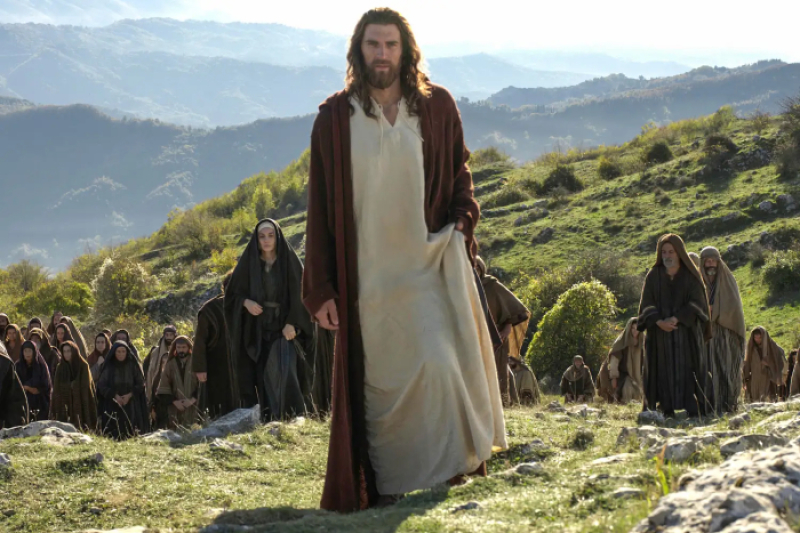
Mel Gibson says “The Resurrection of the Christ,” the long-awaited sequel to his 2004 blockbuster “The Passion of the Christ,” will take a different approach from its predecessor by using English dialogue and a nonlinear narrative.
Speaking earlier this month at Fan Expo Boston, Gibson told Collider that both installments of “Resurrection” were shot together in Rome. “Yeah, I shot them both in Rome and together at the same time. So now I'm in post-production,” he said. “I'm editing and doing visual effects. It's pretty crazy. I don't think it's anything anyone would expect.”
Principal photography wrapped ahead of schedule following 134 days of filming at locations across Italy, including Rome, Matera, Bari, Ginosa, Craco and Brindisi, according to a statement Lionsgate previously provided to The Christian Post.
Although the project was not originally conceived as a conventional two-part sequel, Gibson said he worked for nearly a decade on the “Resurrection” screenplay with “Braveheart” screenwriter Randall Wallace and his brother, Donal Gibson.
“We sat down and we rolled our sleeves up, and it was a very difficult subject because anybody gets murdered in public and then under his own strength and power comes back to life, and there's not just a biblical account,” Gibson stated. “There are 17 separate secular historians that attest the same kind of thing. So it's not a fairy tale, and the object is to make it believable and understandable at the same time, and it's a very difficult thing to understand.”
Gibson said the decision to present the resurrection of Jesus of Nazareth through a nonlinear structure was intended to help audiences understand its broader significance, according to Collider. “So you can't just tell the linear story that way,” he explained. “It's like, OK, you have to juxtapose the actual event against many other actual events in order to grasp the significance of it, so it's another jigsaw puzzle. It's not linear.”
He added that dividing the story into two films was already part of the screenplay and said each installment would also work independently, comparing the approach to the “Godfather” trilogy.
“There’s 'Part One' and 'Part Two,' and they’re distinct,” he said. “I think they stand alone as individual pieces, but they do complete one another. So that’s good.”
Gibson also acknowledged that using English for “Resurrection” marks a major change from “The Passion of the Christ,” which relied primarily on Aramaic and Latin, saying he did not want multiple translations to distract audiences from the subject matter.
The filmmaker has previously said the screenplay explores Hell, Sheol, the fall of angels and the origins of Satan, at one point describing the story as “an acid trip.”
Lionsgate has scheduled “Resurrection: Part One” for release on May 6, 2027, coinciding with Ascension Day, while “Part Two” is set for May 25, 2028, during Memorial Day weekend and another Ascension Day observance.