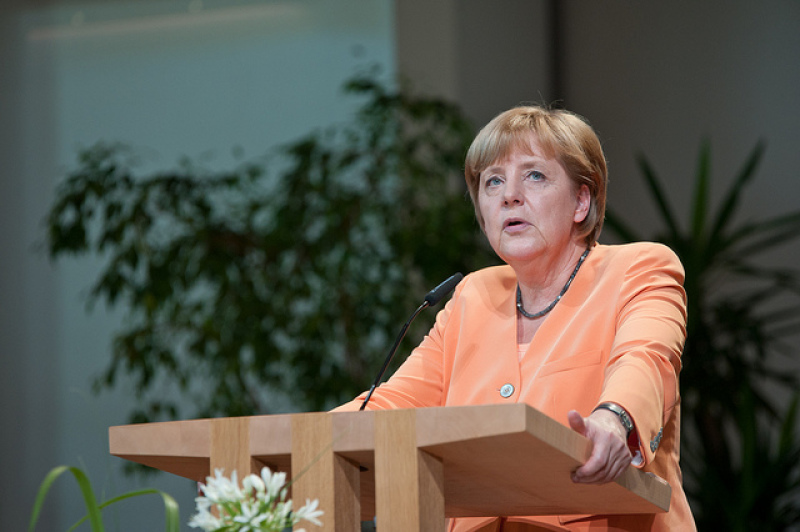
German Chancellor Angela Merkel is TIME's 2015 'Person of the Year', who stood firm in giving asylum to victims of war-torn middle east, amid opposition from her conservative allies and many from the nation's citizenry.
A self-professed Christian, Merkel welcomed in hundreds of thousands of refugees when many other nations shut their doors to help those fleeing ISIS persecution, bombs and mayhem back at home.
"By viewing the refugees as victims to be rescued rather than invaders to be repelled, the woman raised behind the Iron Curtain gambled on freedom. The pastor's daughter wielded mercy like a weapon," TIME Managing Editor Nancy Gibbs wrote.
She was awarded the title for her strong convictions in resolving the economic and political dilemmas confronted by Germany and Europe as a whole.
"The prospect of Greek bankruptcy threatened the very existence of the euro zone. The migrant and refugee crisis challenged the principle of open borders. And finally, the carnage in Paris revived the reflex to slam doors, build walls and trust no one," Gibbs said.
"Each time Merkel stepped in. Germany would bail Greece out, on her strict terms. It would welcome refugees as casualties of radical Islamist savagery, not carriers of it."
She has testified to her faith at several occasions, even though she has never been too vocal about it given the secular cultural climate of Germany and many other nations in Europe.
"I believe in God, and religion is also my constant companion, and has been for the whole of my life," she reportedly told a theology student in an interview from 2012, according to RNS.
"The structure of the world relating to belief is a framework for my life that I consider very important," she said in another interview.
The TIME column also mentioned how the example set by Merkel contrasts sharply with the tragic events from Germany's earstwhile nationalistic past of Hitler's Nazism.
"Germany has spent the past 70 years testing antidotes to its toxically nationalist, militarist, genocidal past," Gibbs continued. "Merkel brandished a different set of values --humanity, generosity, tolerance-to demonstrate how Germany's great strength could be used to save, rather than destroy. It is rare to see a leader in the process of shedding an old and haunting national identity."
Merkel's standing with the German people, however, fell significantly due to her decisions regarding the refugee crisis. Die Welt criticized her by saying, "We are importing Islamic extremism, Arab anti-Semitism, national and ethnic conflicts of other people as well as a different understanding of society and law." However, Merkel remained firm in the backdrop of opposition and criticism.
"If we now have to start apologizing for showing a friendly face in response to emergency situations," she said, "then that's not my country."
Donald Trump has called Merkel "insane" and the refugees "one of the great Trojan horses."
But Merkel has maintained her stance of reaching out instead of shutting off and erecting boundaries.
"Fear was never a good advisor", she said in one interview. "Cultures that are marked by fear will not conquer their future."