A federal appeals court mulled over the decision of a lower court which had judged North Carolina government officials' Christian prayers at the start of meetings unconstitutional.
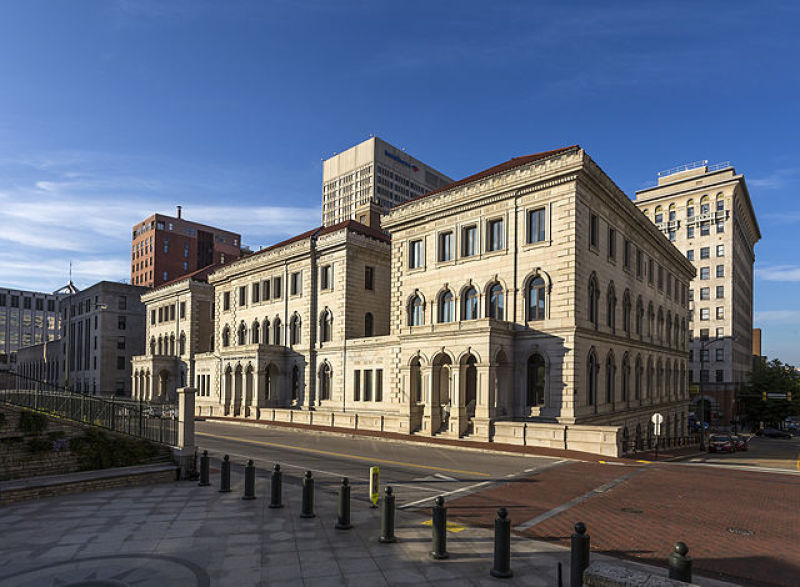
Oral arguments were presented from both the sides of the Rowan County Commission prayer lawsuit to a panel of three judges at the Fourth Circuit US Court of Appeals in Richmond, Virginia, on Wednesday morning, according to media reports.
In 2013, the prayer practices of the commissioners were ruled unconstitutional at the NC Middle District Court, which said that the prayers appear to advance Christian beliefs. The verdict was challenged by the officials who appealed it to the higher court in June 2015.
A previous Supreme Court decision ruled that local clergy's Christian prayers during town meetings in New York were constitutional. However, the Fourth Circuit Court is now considering whether the office of the people delivering the prayers matters, and whether inviting others to join in prayer could be see as coercive.
Rowan County was represented by National Center for Life and Liberty (NCLL), and their attorneys were given the first chance to lay down their arguments, and were given an additional time to answer the opposition.
Their attorney Allyson Ho stressed that the identity of the prayer giving person, which was County Commissioners, did not matter.
Ho said that Rowan County Commission case was not different from the New York case, adding that the constitutionality of prayers does not depend on the people delivering the prayer, whether they are commissioners or chaplains selected by government personnel.
"Either way, it's the government speaking" the lawyer said.
The plaintiffs were represented by American Civil Liberties Union (ACLU), which said that the identities matter, drawing reference from a SCOTUS case which permitted volunteer chaplains to offer prayers at the beginning of the meetings.
The ACLU attorney argued that the lower court's ruling must be upheld as the commissioners' prayers that were predominantly Christian were "unconstitutionally coercive," saying that the prayers included not only the elected officials but also the citizens of the county through phrases such as, "I pray that the citizens of Rowan County will love you, Lord."
Two of the judges from the panel, Steven Agee and Dennis Shedd, expressed their doubt if inviting the residents could be interpreted as coercion as everyone was free to remain seated or leave the room in the prayer time.
The judges will consider the arguments of both sides of the case and are expected to decide on the lawsuit in the coming days or months.