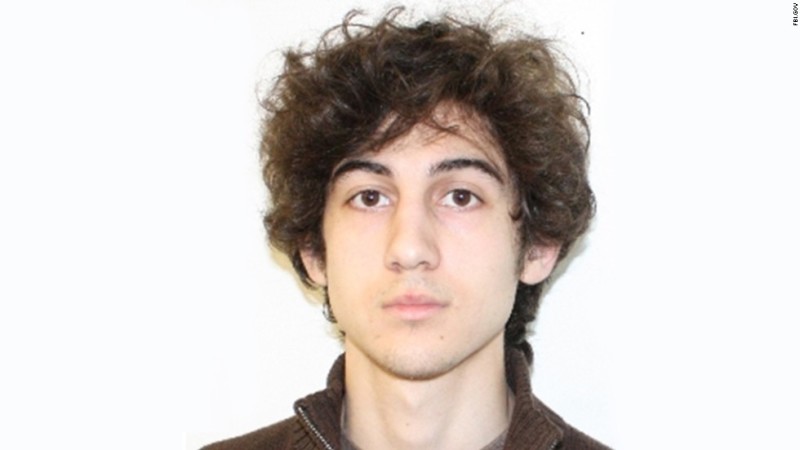

Dzhokhar Tsarnaev, who was found guilty of the Boston Marathon bombing that took place in 2013, spoke publicly at court for the first time in two years, and apologized to the victims.
"Immediately after the bombing, which I am guilty of "” if there's any lingering doubt about that, let there be no more. I did do it along with my brother "” I learned of some of the victims," Tsarnaev said after 12 victims testified before him in court. "I learned their names, their faces, their age. And throughout this trial more of those victims were given names, more of those victims had faces, and they had burdened souls."
"I am sorry for the lives that I've taken, for the suffering that I've caused you, for the damage that I've done. Irreparable damage," he continued.
On the same day, Judge George O'Toole read all of the sentences for the 30 crimes Tsarnaev was found guilty of committing, six of which were death sentences by lethal injection.
Three people were killed by the blast of the bombs planted by Tsarnaev and his brother, Tamerlan Tsarnaev, and hundreds were injured. Many lost limbs, suffered hearing losses, and developed traumatic disorders.
Responses from the victims toward Tsarnaev's public apology were ambivalent.
"He said he was remorseful. I find that hard to believe since I've come to a lot of the trial and never really saw that at all from him. It really does not change anything for me because, what he took from me, I'm never going to be able to regain," Scott Weisberg, who lost his hearing due to the bombings, told ABC News.
Mel Robbins, a CNN commentator, wrote in an opinion piece that "it's clear he does not regret the terrorist attack."
"He didn't renounce terrorism," Robbins wrote. "He didn't renounce extremism in the name of Islam. He didn't actually apologize for planting the bombs."
The timing of the apology made it seem sincere, according to Boston criminal defense and civil liberties lawyer, Harvey Silverglate.
"It seemed to me perfectly sincere, and sincere in light of the fact that he made the statement at a point where it didn't really influence the outcome," Silverglate told the Christian Science Monitor.
For Henry Borgard, who had to leave school due to the post-traumatic stress he developed from the bombing incident, "hear[ing] him say sorry, that is enough," according to the New York Times. Borgard said he forgave Tsarnaev.