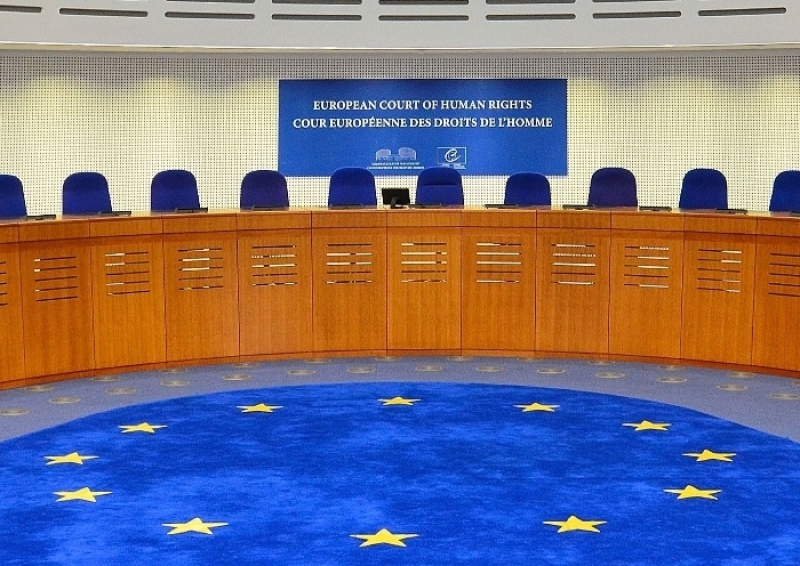
The European Court of Human Rights is examining a case that could set an important precedent on whether religious symbols may be displayed in courtrooms and other public buildings across Europe.
The dispute stems from complaints filed by Greek atheists who contend that the presence of Christian icons in judicial settings infringed on their right to a fair trial and freedom of religion. The challenge centers on two separate hearings conducted in 2018 and 2019 before Greece’s highest administrative tribunal, the Greek Supreme Administrative Court.
In both proceedings, the applicants requested the removal of a Christian Orthodox icon depicting Jesus Christ from the courtroom. They argued that the display violated Article 6 and Article 9 of the European Convention on Human Rights, which safeguard the right to a fair trial and freedom of religion, respectively, according to the legal advocacy group ADF International.
Greek judges rejected the requests in each instance, allowing the religious imagery to remain, according to the official case summary released by the European Court.
The first case, heard in 2018, was brought by the Union of Atheists, which challenged ministerial decisions governing religious education. The group claimed that the icon’s presence during a Sept. 21 hearing—where Orthodox Christian interveners, including the Church of Greece, were involved—undermined the court’s impartiality.
That application was dismissed on Oct. 11, 2019, with the court ruling the icon-related request inadmissible and rejecting arguments that the religious symbol compromised judicial fairness.
The second case, considered in May 2019, involved two individuals objecting to the recording of religious affiliation on school documents. They similarly asked for the icon’s removal, citing concerns about neutrality.
While the court ruled in favor of the applicants on their primary claim and annulled the relevant ministerial order, it dismissed the icon complaint as unfounded. Judges pointed to Greece’s Orthodox Christian heritage and long-standing tradition as justification for permitting religious symbols in courtrooms.
ADF International later filed a third-party intervention backing Greece’s position, asserting that calls to remove religious imagery rest on a misinterpretation of human rights law. The organization said European jurisprudence has repeatedly affirmed a state’s discretion to reflect its cultural and religious heritage in public spaces, according to ADF Senior Counsel Adina Portaru.
“The display of religious symbols in public spaces is in no way incompatible with human rights law,” Portaru said in a statement. “Public spaces should not be stripped of crosses, icons or other symbols with religious, cultural, and historical significance in the name of pluralism.”


