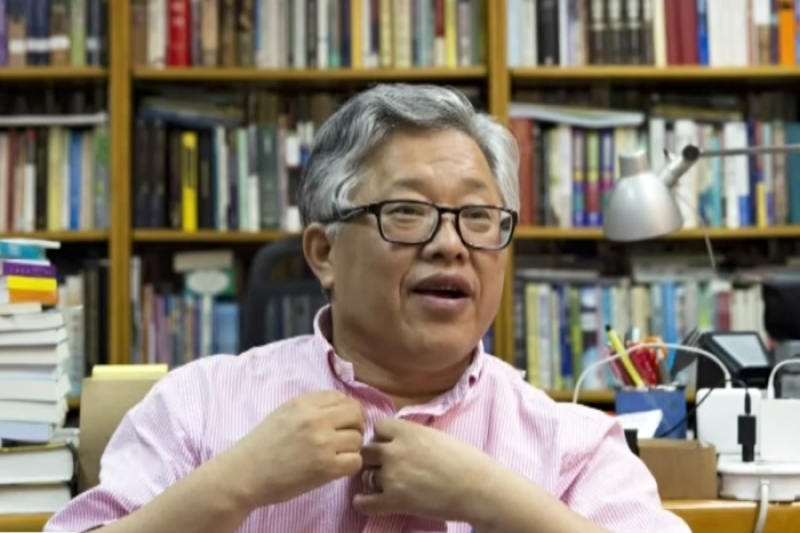
Days after reuniting with his family for the first time in eight years, Chinese house church pastor Ezra Jin Mingri pledged to keep advocating for eight fellow church members who remain imprisoned under harsh conditions in China.
Jin, 56, was released last week after spending 266 days in a Chinese prison. Authorities detained him last October alongside 28 other leaders and members of Beijing Zion Church.
His release came less than two months after President Donald Trump discussed his case with Chinese President Xi Jinping during a meeting in Beijing.
In an opinion article published by The Wall Street Journal, the Beijing Zion Church founder said he hoped his freedom could signal a “new chapter for people of faith in China” where “people can freely worship.”
“Such a future might seem impossibly remote, but so did my release,” Jin wrote.
Jin said guards placed him in a van last Friday, leading him to believe he was being taken to trial. Although he expected to receive a lengthy sentence for leading an underground house church, authorities instead released him and dropped all charges.
“I couldn’t be more thankful, and pray that others still imprisoned will experience this same freedom soon. Mine is a God of miracles, and he constantly surprises me.”
Eight members of his church and several other Christian leaders nevertheless remain detained as prisoners of conscience in China. Jin described them as “men and women [are] some of the most caring people I have met.”
“[They] are confined in cramped cells and sleep on floor mats in blistering heat,” he wrote. “Many leave behind young families. I won’t rest until they see freedom.”
Jin argued that Chinese officials “have no reason to fear the tens of millions in China who worship in unregistered congregations.”
“These Christians love their nation,” Jin declared. “They only want to worship God peacefully according to the Bible and to serve others, especially the poor, the disabled and the elderly.”
“Freedom of religion is a universal right promised in the Chinese Constitution,” he continued. “I hope that all our church members are freed and that China becomes a place where all people can freely worship. A first step would be to legalize house churches alongside state-run churches in the same way China has legalized private industry alongside state-owned enterprises.”
In an interview with The New York Times, Jin said he had been held in a “harsh jail environment” and had “no idea what the future held” before his release. He added that he had expected a prison sentence of about 15 years.
According to Jin, dozens of inmates shared a room measuring roughly 1,000 square feet. During the day, prisoners were required to remain seated on benches and had to ask permission to stand, causing many to develop sores. At night, they slept together on a platform bed.
The newspaper reported that officials repeatedly pressured Jin to plead guilty. While he acknowledged founding the church and continuing to hold gatherings after authorities shut it down, he maintained that those acts of worship were lawful.
“[My release] may be because everybody knows President Xi personally made the decision,” Jin said. “Otherwise, this wouldn’t be possible.”
“I hope people don’t think ‘We succeeded’ and forget the others,” Jin added. “We must go all out and speak out. That’s what my family did, and look at the result.”