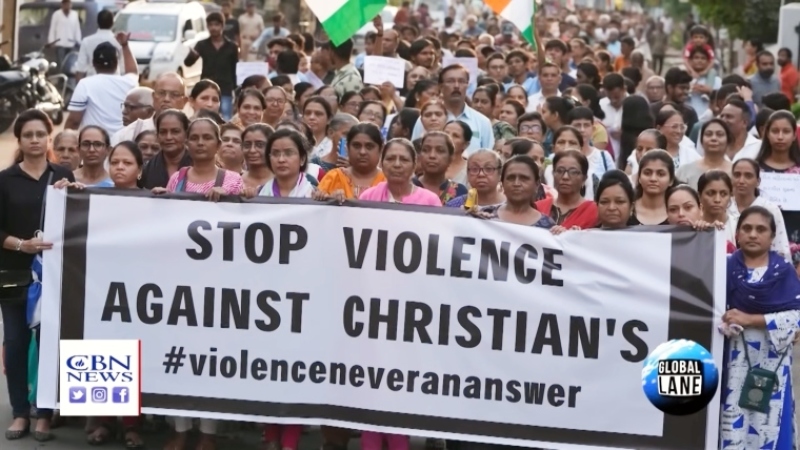
India’s Supreme Court has initiated a major constitutional examination of anti-conversion statutes enforced in 12 states, following a broad legal challenge brought by Christian organizations that argue the laws have been used to target religious minorities.
On Feb. 2, a bench led by Chief Justice of India Surya Kant and Justice Joymalya Bagchi issued formal notices to both the central government and a dozen state governments in response to a petition filed by the National Council of Churches in India (NCCI).
The NCCI, which says it represents about 14 million Christians through 32 member churches, 17 regional councils, 18 national bodies and seven affiliated agencies, contends that the anti-conversion laws have been misused. According to the petition, the legislation has enabled false accusations, arbitrary detentions and even vigilante violence directed at minority communities.
The Supreme Court instructed the governments involved to submit a joint counter affidavit within four weeks. Recognizing the constitutional implications of the case, the bench also directed that the matter be heard by a three-judge panel.
The petition challenges provisions and amendments enacted in Himachal Pradesh, Odisha, Karnataka, Uttar Pradesh, Uttarakhand, Haryana, Arunachal Pradesh, Madhya Pradesh, Chhattisgarh, Gujarat, Jharkhand and Rajasthan.
The petitioners have also requested an interim stay on enforcement of the statutes, alleging that they have led to widespread harassment of minorities through complaints filed by unrelated third parties and lacking sufficient procedural safeguards.
Representing the central government, Solicitor General Tushar Mehta opposed the petition and said the government’s formal reply would be submitted shortly. He maintained that the petitioner’s claims were not “factually correct” and argued that the legal issues had already been addressed in a 1977 Constitution Bench ruling.
In Rev. Stainislaus v. State of Madhya Pradesh, the Supreme Court upheld laws prohibiting conversion by force, fraud or inducement, ruling that the constitutional right to “propagate” religion under Article 25 does not include “the right to convert another person to one’s own religion, but to transmit or spread one’s religion by an exposition of its tenets.”
The current case, however, centers on whether more recent anti-conversion measures go beyond restricting coercion and instead create what petitioners describe as a framework of suspicion, prior permission and criminal liability surrounding voluntary religious conversion and interfaith relationships.
Petitioners have also cited the Supreme Court’s 2018 ruling in Shafin Jahan, in which the court stated that “the choices of faith and belief, as indeed choices in matters of marriage, lie within an area where individual autonomy is supreme.” They argue that modern anti-conversion laws undermine that principle by imposing procedural hurdles and criminal penalties on personal religious decisions.
The Supreme Court previously hinted at concerns about certain state provisions. In May, the court observed orally that aspects of the Uttar Pradesh anti-conversion law “in some parts may seem to be violative of the fundamental right to religion guaranteed under Article 25 of the Constitution.”
The case is expected to proceed to substantive hearings once responses from the central and state governments are filed, potentially setting the stage for a landmark ruling on religious freedom and individual autonomy in India.