A newly published archaeological study suggests that a 2,750-year-old standing stone discovered at Tel Eton in southern Israel may provide evidence connected to the religious reforms of King Hezekiah described in the Bible.
The research, conducted by Bar-Ilan University professor Avraham Faust, examines an unusual stone uncovered within an ancient Israelite residence and argues that it may have served a religious function before being deliberately dismantled, according to the All Israel News.
According to the study, the object may have been a massebah, a standing stone commonly associated with worship practices throughout the ancient Near East.
If that interpretation is accurate, the stone’s apparent removal and destruction could correspond with biblical accounts of Hezekiah’s efforts to eliminate local religious sites and centralize worship in Jerusalem.
“Standing stones were a common religious feature in the ancient Middle East and beyond from prehistory to a much later period, and are attested in both archaeological finds and written sources, including in the Bible,” Faust said in an interview with The Times of Israel.
The stone itself is substantial in size, weighing approximately 750 kilograms and standing about 1.4 meters tall.
“People used large stones as a symbol,” he continued. “Their exact meaning is debated, but all scholars agree that they were used in religious contexts."
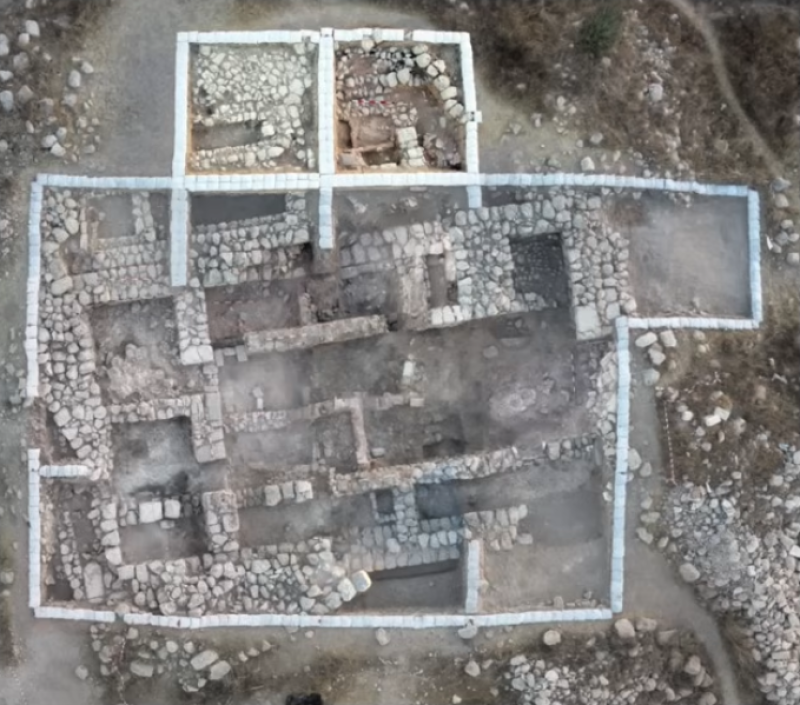
Researchers believe the artifact was originally incorporated into a traditional Israelite four-room house before later being removed and reused after the structure was destroyed.
Excavators first uncovered the stone during archaeological work conducted at Tel Eton between 2014 and 2015, although its significance was not immediately recognized.
“We did not immediately understand what we had found,” Faust recalled.
“At the beginning, we thought the stone layer was part of the collapse of a wall, and that the large stone was part of it. We removed all the other stones, but the large one was far too heavy. We initially considered breaking it into pieces to make it easier to remove, but after starting the process, we decided against it. Only later, we understood that it must have been a massebah,” he explained.
Faust said scholars generally focus on two major reform movements when discussing religious change in ancient Judah.
“Most scholars consider and debate two main reforms that led to religious changes during the Iron Age, Hezekiah’s and King Josiah’s,” Faust said.
Because the archaeological dating appears to correspond more closely with the eighth century B.C., Faust believes the evidence aligns more naturally with Hezekiah’s reign than with the later reforms associated with King Josiah.
II Kings 18:3-4 specifically describes King Hezekiah destroying standing stones and other religious symbols as part of his reforms: “[Hezekiah] did what was pleasing to God, just as his forefather David had done. He abolished the shrines and smashed the pillars (massebahs) and cut down the sacred post.”