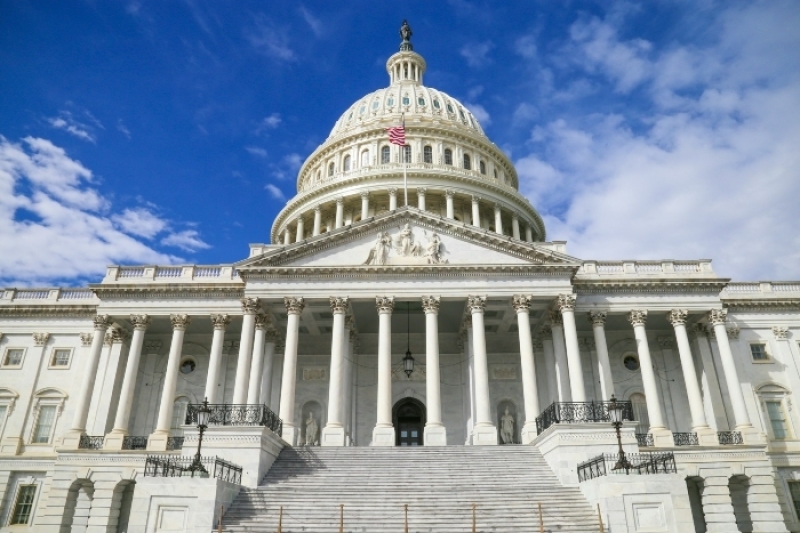
The U.S. House of Representatives has approved a measure that would withhold all American assistance to Nigeria until its government takes meaningful action “to prevent and respond to violence in the country.”
The provision was included in the Fiscal Year 2027 National Security, Department of State and Related Programs Appropriations Act, which cleared the House on Wednesday.
The original legislation called for suspending 50% of U.S. aid to Nigeria. Lawmakers later adopted an amendment introduced by Rep. Greg Steube, R-Fla., raising the amount to 100% until the secretary of state certifies that Nigerian authorities are protecting Christians and prosecuting those responsible for religious violence.
“My amendment to withhold 100% of U.S. aid to Nigeria until its government stops the slaughter of Christians has passed,” Steube wrote on X following the vote. “American taxpayers should never bankroll governments that turn a blind eye while Christians are abducted, tortured, and murdered.”
Backers of the measure say cutting assistance would place greater pressure on President Bola Tinubu’s administration to strengthen security in areas where Christian communities have faced repeated attacks by armed groups.
Rep. Riley Moore, R-W.V., the sponsor of the broader bill, said Nigerian Christians have endured prolonged violence without adequate government protection.
“Christians in Nigeria continue to endure horrific violence, murder, and persecution while a majority of the world turns a blind eye to their suffering. President Trump has taken bold actions to strike the terrorists in Nigeria, and this bill sends a clear message that the United States will continue to stand with persecuted Christians across the globe, especially in Nigeria,” Moore said after the passage.
The bill must still pass the Senate and receive President Donald Trump’s signature before becoming law.
If enacted, the funding restriction could affect hundreds of millions of dollars used for health care, humanitarian assistance, security partnerships, governance projects and development programs throughout Nigeria. U.S. foreign aid data shows that Nigeria received approximately $929 million in American assistance in 2024, making it one of the largest recipients in sub-Saharan Africa, before the amount fell to $616 million in 2025.
Nigeria continues to face several overlapping security emergencies. Boko Haram and the Islamic State West Africa Province remain active in the northeast, while heavily armed criminal groups operate throughout the northwest. In the Middle Belt, clashes involving farmers, nomadic herders and armed militias have killed thousands of people over the past decade.
Christian advocacy organizations contend that believers have been targeted at disproportionate levels, particularly in Plateau and Benue states, where churches and predominantly Christian villages have repeatedly come under attack.
Tinubu’s government has rejected claims that Nigerian authorities are supporting or permitting a coordinated campaign against Christians. Responding to U.S. criticism last year, Tinubu said the country’s security problems affect communities “across faiths and regions” and maintained that Nigeria remains committed to religious tolerance.