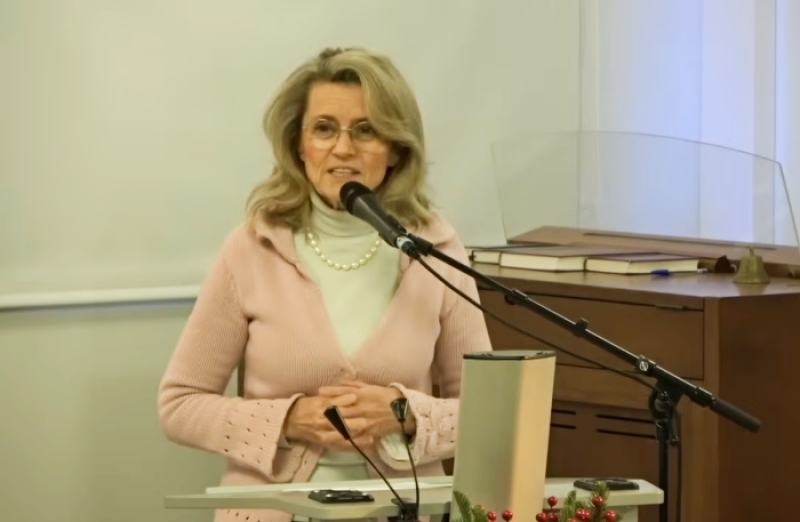
Päivi Räsänen, a Finnish member of parliament awaiting a ruling from the country’s top court over a criminal case tied to a Bible verse tweet, is scheduled to testify before the U.S. Congress on Wednesday about expanding speech restrictions in Europe.
Räsänen is set to appear before the House Judiciary Committee in Washington during a hearing on foreign censorship that will take place at the Rayburn House Office Building.
The session, titled “Europe’s Threat to Speech and Innovation: Part II,” will explore how speech laws across the European Union and individual European countries are influencing democratic expression and innovation in the United States, with particular attention to the EU’s Digital Services Act.
Among the other scheduled witnesses is Lorcán Price, a legal expert with ADF International, who is expected to caution lawmakers about the cross-border impact of European speech regulations and their potential to shape American technology platforms and legal standards.
Räsänen’s legal case originates from a 2019 social media post in which she quoted Romans 1:24–27 and questioned the Evangelical Lutheran Church of Finland’s sponsorship of an LGBT pride event. The post prompted police complaints and ultimately led to a criminal investigation. Prosecutors later charged her with counts of agitation against a minority group under Finland’s hate speech laws.
The Supreme Court of Finland heard arguments in the case in October 2025, following two acquittals by lower courts of both Räsänen and Lutheran Bishop Juhana Pohjola, who published a 2004 pamphlet written by Räsänen titled “Male and Female He Created Them.”
Räsänen previously served as Finland’s interior minister from 2011 to 2015. Prosecutors based the charges on three expressions: her 2019 tweet, the pamphlet co-authored with Pohjola, and comments she made during a radio interview.
Throughout the proceedings, Räsänen has declined to retract her statements, insisting that she spoke from her religious convictions and that quoting Scripture cannot constitute a criminal offense. Her defense team argues that penalizing her speech violates Finland’s Constitution as well as international human rights protections.
Both Räsänen and Pohjola were subjected to repeated police interrogations over the tweet and the pamphlet, which prosecutors combined with her radio remarks to advance the case. A conviction could result in financial penalties and orders restricting the distribution of the contested content.
Räsänen has repeatedly warned that an adverse ruling would have consequences beyond her own case. “If I would lose, it would mean … starting a time of persecution of Christians in Finland and also in Europe,” she said.