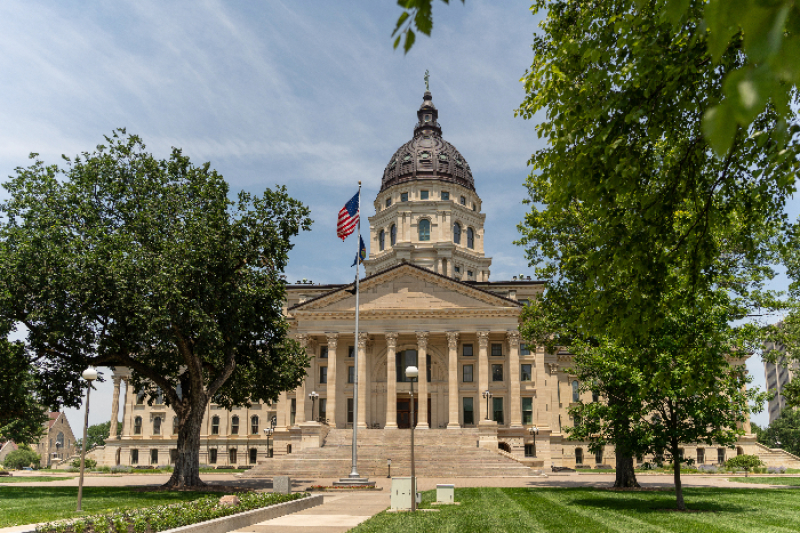
Kansas lawmakers have voted to override Democratic Gov. Laura Kelly’s veto of legislation restricting access to certain public restrooms and locker rooms based on biological sex.
Senate Bill 244 was rejected by Kelly last week, but the Republican-controlled Legislature moved swiftly to reverse her decision. The Kansas Senate voted 31-9 on Tuesday to override the veto, followed by an 87-37 vote in the Kansas House on Wednesday.
Under the new law, public buildings must designate multi-occupancy private spaces according to sex. “The governing body, or chief administrative officer if no governing body exists, of each public building shall designate each multiple-occupancy private space in such building for use only by individuals of one sex,” stated SB 244.
The legislation further provides that authorities "shall take every reasonable step to ensure an individual does not enter a multiple-occupancy private space that is designated for use only by individuals of the opposite sex.”
The bill outlines specific exemptions, including allowances for custodial and maintenance workers, emergency medical assistance, law enforcement activity, young children under age 9 accompanied by a caregiver and other limited situations.
Supporters of the measure, including the religious liberty legal organization Alliance Defending Freedom, praised the override as a step toward safeguarding privacy for women and girls.
“Women and girls shouldn’t be forced to sacrifice their privacy and safety in the name of promoting gender ideology,” said ADF legal counsel Sara Beth Nolan in a statement.
“Allowing men to invade women’s most intimate spaces — including changing rooms and restrooms — compromises their dignity. SB 244 ensures that the private spaces of women and girls in government buildings are not open to men. It rightly prioritizes privacy and safety over ideology.”
Opponents, including the American Civil Liberties Union of Kansas, criticized the legislation as discriminatory and harmful to transgender individuals.
“This discriminatory bill undermines our state’s strong constitutional protections against government overreach and persecution. It subjects people to unacceptable privacy violations and puts them in harm’s way,” said ACLU of Kansas Executive Director Micah Kubic in a statement.