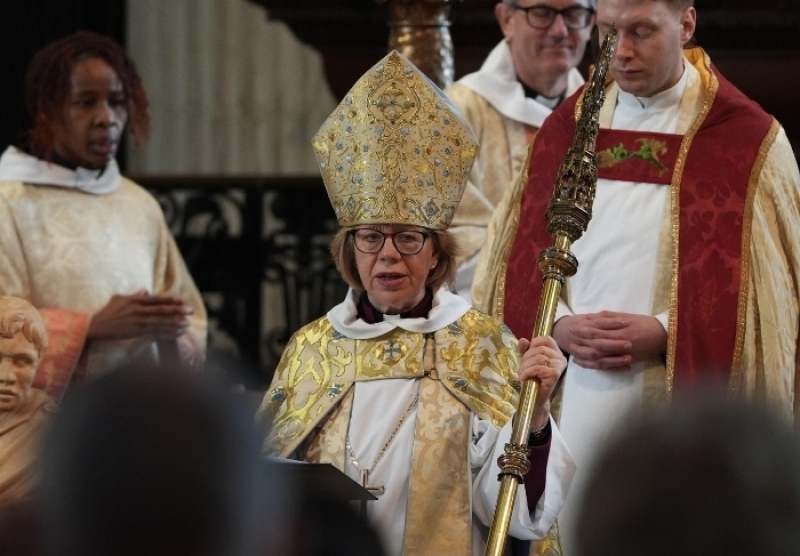
The incoming Archbishop of Canterbury has publicly rejected assisted suicide, weighing in as a controversial bill permitting assisted dying advances through the U.K. Parliament following a narrow vote in the House of Commons last year.
In a recent appearance on the BBC’s “Today” program, Dame Sarah Mullally discussed the issue with former prime minister Theresa May, drawing on her background in both healthcare and ministry to explain her opposition.
Speaking from her experience as a nurse and an Anglican priest, Mullally said she holds a “principled view against assisted dying,” emphasizing the moral obligation to protect those most at risk in society.
“I think that we need to care for the most vulnerable in our society, we need to have a view where everybody’s made in the image of God,” Mullally said during the interview.
Addressing arguments from supporters of the legislation, Mullally questioned whether true choice exists under current conditions. “Those who support the bill talk about choice,” she said. “I’m not sure we have a choice, not least that actually we don’t fund proper palliative care. I’m worried that people may make a decision for assisted dying because they’re not having the right palliative care or the right social care.”
She further warned that systemic inequality could pressure disadvantaged patients into choosing assisted death rather than receiving life-extending treatment. Mullally pointed to “a whole group of people who haven’t had a choice in life,” describing them as “people who, because of inequality, are more likely to get cancer and be late to diagnose and then to die of it.”
According to Mullally, such individuals “may well be given options and feel that because of other people’s value judgments, the option is assisted dying and not chemotherapy and to fight for it.”
She concluded that the proposed safeguards fall short, stating, “Those safeguards are not in the bill, and my belief is I’m not sure any amendments will make it safe.”
Mullally’s remarks come as lawmakers debate the Terminally Ill Adults (End of Life) Bill, which would allow terminally ill adults in England and Wales to formally request assistance in ending their lives. The process outlined in the bill requires a written declaration, medical assessments by two doctors, and approval from an Assisted Dying Review Panel.
While the legislation specifies that physicians are not compelled to participate and criminalizes coercion or falsification of documents, critics argue the protections remain insufficient.
The bill passed the House of Commons by a slim 314–291 margin on June 20, 2025, with voting largely split along party lines. It has since moved to the House of Lords, where it awaits further debate and potential revision.