Theologian
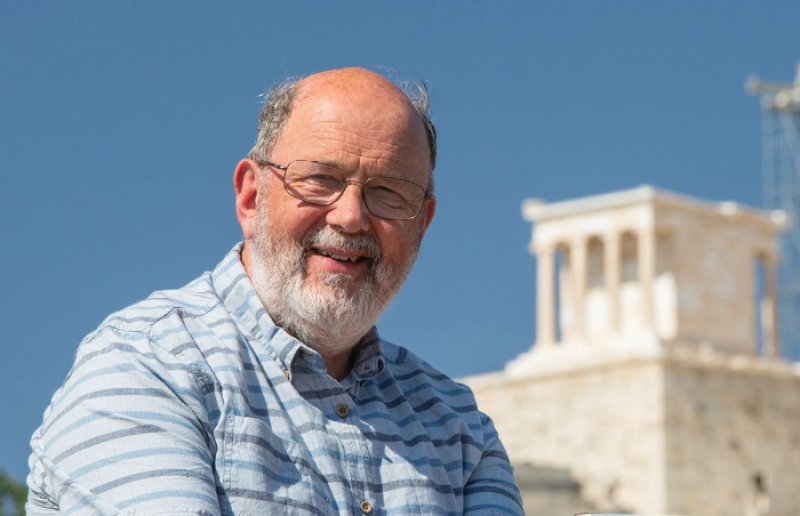
Theologian N.T. Wright is urging Christians to approach accounts of near-death experiences with caution, warning that visions of Heaven, Hell or encounters with Jesus shouldn't become the basis for Christian beliefs about the afterlife.
Speaking on an episode of the “Ask N.T. Wright Anything” podcast, the 77-year-old New Testament scholar addressed questions from listeners struggling to reconcile reports of near-death experiences (NDEs) with the Bible’s teaching about the resurrection of the dead.
Wright, the former bishop of Durham and one of the world’s most influential New Testament scholars, said he doesn't dismiss such experiences outright. But he stressed that Christianity’s ultimate hope isn't an instant existence in Heaven after death, but the future resurrection of the body and renewal of creation.
“Whatever you believe about where or what or how people are immediately after bodily death, that's not the same as the promise of new Heavens and new Earth at the end, and of being raised to new bodily life at that time,” Wright said.
“If you understand the resurrection, certainly in the way that first-century Judeans would, and certainly in the way that the New Testament writers do, the resurrection, the final resurrection, is going to be at the end when God renews the whole creation,” he said.
That understanding, Wright said, means there's an “interval of time between bodily death and bodily resurrection” for those who die before Christ’s return.
Pointing to Romans 8, Revelation 21 and 1 Corinthians 15, Wright said the New Testament uses images of birth, marriage and victory to describe the dramatic renewal that will occur at the end of the age.
“Something very dramatic is going to happen at the end,” he said. “And where we are after death, or what state we're in after death, is a different sort of question.”
Wright also challenged the idea that the “soul” is an inherently immortal part of a person that escapes the body at death. He said that concept owes more to Platonic philosophy than biblical anthropology. Instead, Wright suggested that Christians who die are sustained by God until the resurrection.
“The Holy Spirit, who has indwelt a Christian during the present life, will continue to sustain that person's spirit in the nearer presence of Christ and of God,” Wright said, pointing to the Apostle Paul’s words in Philippians 1 about his desire to “depart and be with Christ.”
The theologian recalled meeting a man while teaching in Montreal who had served as a young pilot during World War II and was shot down. The man told Wright he had been technically dead before unexpectedly recovering and had experienced what he described as the overwhelming love and presence of God.
The experience changed the trajectory of the man’s life. Although he returned to caring for his family, Wright said the pilot became convinced that he would eventually enter Christian ministry. Years later, he enrolled as one of Wright’s students to train for ministry.
“I was very moved, and still am very moved by that and similar things,” Wright said.
Still, the theologian cautioned that emotionally powerful testimony doesn't necessarily establish what happens after death.
Near-death experiences might be influenced by a person's existing expectations or continued brain activity, Wright said. Someone who already expects to enter Heaven and encounter Jesus, for example, might experience something resembling that expectation in a dreamlike state.
“It might well be a wonderful dream,” Wright said. “We could all have wonderful dreams during the present life as well, but whether one can then build anything on that in terms of what the interim state is actually like, I would be very, very cautious.”
“If, when somebody dies, God wants to give that person, as they are making this awesome transition, a sense of beauty, of love, of new creation, if you like, then that's entirely God's business."
But Christians “cannot and should not base any of our beliefs about the future and future life” on such accounts, he added.
The New Testament's central hope, he emphasized, is not simply “life after death,” but what he has frequently described throughout his writings as “life after life after death”: the resurrection of God's people into a renewed creation.
“The importance [is] to cling on to the ultimate of new creation and resurrection,” Wright said, “and to say whatever happens in between whiles, the Christian hope is to be with the Messiah, with Jesus Christ, which is far better.”
If someone receives a glimpse or “foretaste” of that reality during the process of dying, Wright said Christians need not necessarily reject it. But neither should such experiences be treated as proof of what awaits everyone after death.
“You can't then argue from that up to, therefore, there is a life after death,” he said, noting that medical professionals could instead interpret the experience as “the brain going through its final motions.”
According to the National Institutes of Health, near-death experiences are reported by about 17% of those who nearly die, from children to adults, scientists, physicians, priests, ministers and others.
Wright's comments echo cautions previously voiced by pastor and author John Burke, who has studied thousands of near-death experiences over more than three decades. Burke told The Christian Post that after interviewing 70 people from diverse religious and cultural backgrounds, he found striking similarities in their reported encounters with God.
While Burke believes these experiences can point to the reality of God and the afterlife, he similarly warned Christians against using them as the basis for doctrine.
“I don't think we should get our theology of the afterlife or of God from near-death experiences alone,” Burke said. “I honestly think that's very dangerous.”
“The Scriptures need to be the interpretive key to near-death experiences, not the other way around,” he added.
This article was originally published by The Christian Post.