The WNBA has publicly addressed questions surrounding transgender athlete eligibility as debate over biological sex and competitive fairness continues to intensify across women’s sports.
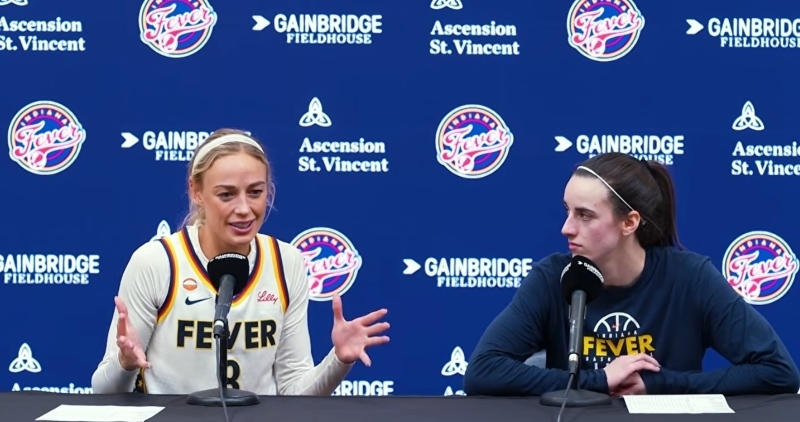
Indiana Fever guard Sophie Cunningham has emerged as a leading voice in the debate, speaking out in support of keeping women’s sports reserved for female athletes.
“I got a lot of negative feedback about me hating trans. And I’m like, ‘I never once said that,’” the WNBA athlete stated. “I think that I am here to extend love. But I also think with that love is truth, being honest. And I want to protect young girls in a locker room, or young girls in sport who shouldn’t have to go against biological men.”
Both supporters and opponents of Cunningham’s position have recently organized demonstrations outside WNBA games to make their views known.
The issue drew additional attention after two former NBA players — former Boston Celtics center Enes Kanter and former Utah Jazz forward and U.S. Senate candidate Royce White — announced that they consider themselves eligible for the WNBA draft.
WNBA Commissioner Cathy Engelbert said Friday that a group of team presidents and general managers would discuss transgender-identified players during a previously scheduled meeting.
Engelbert’s memo came after Kanter described himself as a “WNBA prospect” following a review of the league’s eligibility requirements. White later made a similar declaration.
Kanter wrote in an Aug. 7 X post: “If simply declaring who you are is all that’s required, then I meet every single requirement necessary to compete in the WNBA.”
White also announced his eligibility for the 2027 WNBA draft that day, saying he qualified as a “sometimes identifying transgender woman.”
Team presidents and general managers met Wednesday to consider several issues facing the league, including gender, race, player safety and politics.
“Today's meeting covered a wide range of topics, including ongoing discussions on transgender athletes and the continued hate and vitriol directed at players online. We will continue to engage all league stakeholders in the coming weeks and months,” a WNBA spokesperson said in a Wednesday statement.
“We will approach these important conversations thoughtfully and in alignment with the values of our league,” the spokesperson continued. “There are no immediate eligibility matters affecting the WNBA and we strongly denounce the bad-faith efforts to use these topics to demean or marginalize others.”
The WNBA’s collective bargaining agreement states that “only players who are women are eligible to play in the WNBA,” but the agreement does not provide a technical definition of a woman.