Nigerian authorities confirmed Monday that every remaining 130 student and staff member taken during a mass kidnapping at a Catholic school in the country’s north has now been released.
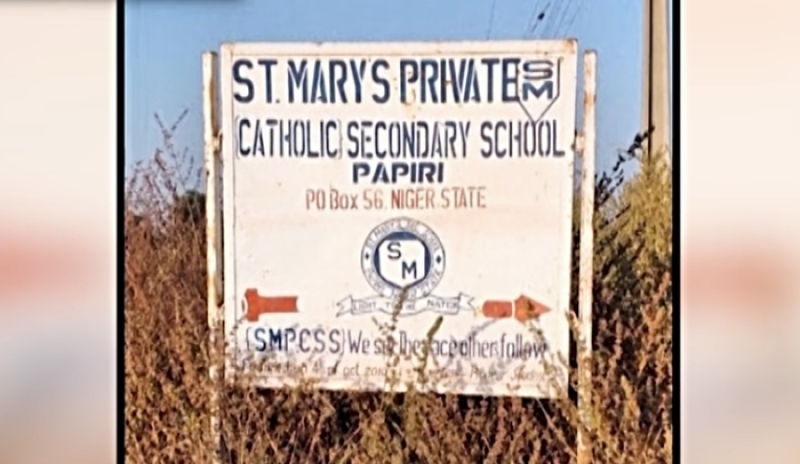
The abduction occurred before dawn on Nov. 21, when gunmen stormed St. Mary’s Catholic School in the Papiri community of Niger state, seizing children and staff before fleeing, according to police and church sources.
Officials said more than 200 people were initially taken during the raid, though about 50 students managed to escape shortly afterward, and another group of roughly 100 captives was freed on Dec. 7. With the latest release, authorities said all 230 abducted students and staff have now been rescued.
Bayo Onanuga, a spokesman for Nigerian President Bola Tinubu, said on social media that the final release followed “a military-intelligence-driven operation,” without offering further operational details.
The Diocese of Kontagora confirmed the development, with diocesan secretary Rev. Fr. Jatau Luka Joseph announcing that the “second batch” of captives was freed on Sunday.
“We are profoundly grateful to the Federal Government of Nigeria, the Niger State Government, the security agencies, and all other partners whose efforts and interventions contributed to the safe release of the victims,” Joseph said in a statement shared by International Christian Concern, which described the outcome as “an early Christmas gift.”
Following their release, the children were taken for medical evaluations, and officials said counseling services are being arranged. Security alerts remain in place for schools across the region.
The St. Mary’s kidnapping underscores Nigeria’s ongoing struggle with mass abductions, especially attacks targeting schools. Since the 2014 Chibok kidnapping carried out by Boko Haram, which sparked the global #BringBackOurGirls campaign, more than 1,500 students have been abducted in similar incidents, according to Amnesty International.
Investigators say many of the kidnappings are linked either to Islamist extremists or to heavily armed criminal groups seeking ransom payments, a trend fueled by economic hardship and weak state security. Advocacy groups have repeatedly faulted the government for failing to adequately safeguard civilians.
Nigeria, Africa’s most populous country, remains sharply divided along religious and ethnic lines. Christians, who account for roughly half of the nation’s 220 million people, face increasing violence, particularly in the Muslim-majority north and the volatile Middle Belt.
Fulani militants, often described as nomadic herders in conflict with farming communities, have been accused of targeting Christian villages under the pretext of land disputes. While some analysts stress the role of economic and climate pressures, Christian rights advocates argue that the scale of attacks has reached near-genocidal levels.
Human rights organizations continue to criticize the Tinubu administration for failing to stem the violence despite pledges to strengthen security. Although recent military operations have produced notable rescues, critics say corruption and chronic underfunding still undermine long-term protection efforts.