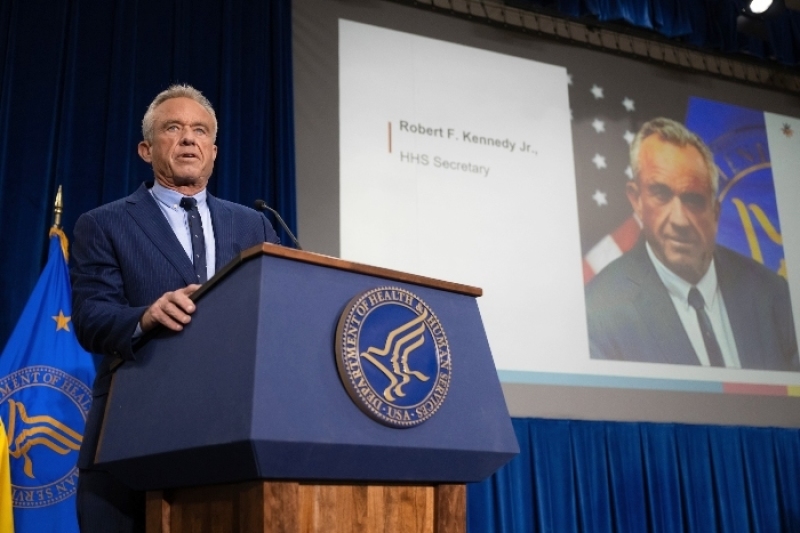
U.S. Health and Human Services Secretary Robert F. Kennedy Jr. unveiled more than $700 million in new federal funding to address addiction, mental illness, and homelessness, while emphasizing a renewed partnership with faith-based organizations.
Kennedy announced the initiative Wednesday at the Easterseals MORC treatment center in Clinton Township, Michigan, describing it as a key component of President Donald Trump’s Great American Recovery Initiative.
The funding package includes support for addiction treatment, behavioral health services and recovery programs designed to help individuals move from crisis toward long-term stability.
As part of the announcement, Kennedy revealed that HHS will dedicate $96 million to the Safety Through Recovery, Engagement, and Evidence-based Treatment and Support program, known as STREETS. He also announced an additional $612 million for a range of behavioral health initiatives.
“Today, HHS is announcing more than $700 million in funding opportunities to expand treatment, to strengthen behavioral health services, and help people move from crisis to recovery. At the center of this effort is our new STREETS initiative, Safety Through Recovery Engagement, and Evidence-based Treatment and Support,” he said.
Kennedy said one of the administration’s priorities is restoring access to federal funding opportunities for religious organizations involved in recovery work.
“One of the features of our STREETS program is opening up funding once again for faith-based organizations,” he continued. “The Biden administration actively discouraged funding to faith-based organizations for recovery. We think that they're critical. President Trump considers them critical.”
Monty Burks, director of the HHS Faith Center and senior adviser for the Great American Recovery Initiative, praised the inclusion of faith-based groups and described them as an essential part of the nation’s recovery efforts.
“There are 350,000 different faith-based communities across the United States of America. Over 160 million people attend some type of congregational service each week,” he said.
“We have a huge population of people who need addiction recovery support services. We are proud to announce and encourage our faith communities to be a part of the Great American Recovery initiative,” he added. “We want to make sure that barriers are removed, opportunities are available, and their voices are heard.”