South Carolina has enacted a new law aimed at preventing major financial institutions from denying services to customers because of their religious or political beliefs.
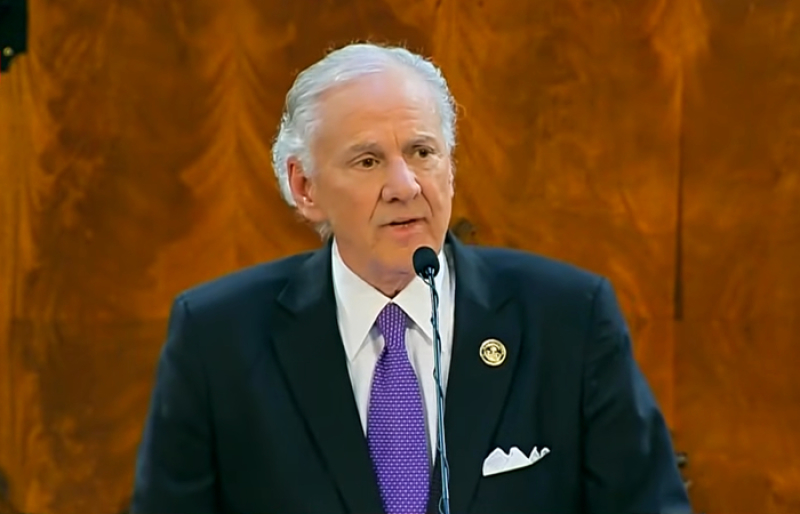
Republican Gov. Henry McMaster signed House Bill 5538, known as the “Guarantee Banking Act,” into law Tuesday after the measure advanced without opposition in the Republican-controlled South Carolina House of Representatives.
The law, which is set to take effect at the beginning of the new year, bars financial institutions from actions that “discriminate in the provision of financial services to a person.”
Under the legislation, discrimination includes “taking an adverse action against a customer” because of the customer’s “exercise of religion that is protected by the First Amendment to the United States Constitution, federal law, or the Constitution or laws of this state, including all aspects of religious observance and practice, as well as belief and affiliation.”
The measure also prohibits adverse action based on a customer’s “speech, expression, opinions, expressive activity, or association that is protected by the First Amendment to the United States Constitution, federal law, or the Constitution or laws of this State, including the lawful preservation of privacy regarding those activities, such as declining to disclose contributions or political activity beyond what is required by applicable state and federal law.”
The new restrictions apply to banks with more than $100 billion in total assets, along with credit card companies and payment processing platforms. Prohibited actions include shutting down checking or savings accounts, cutting off money transfers, or ending access to loans and credit cards.
Customers who are denied “full and equal access in the provision of covered financial services” may request a written explanation within 90 days of the adverse action. Financial institutions are then required to respond within 30 days.
“A statement that the adverse action was based on the institution’s internal standards or policies or that the person failed to achieve a qualifying score on the institution’s credit scoring system is insufficient,” the legislation states.
Alliance Defending Freedom, a conservative Christian legal organization, welcomed the measure and described it as “critical legislation.”
“No one should be denied access to basic financial services based on their political or religious beliefs,” ADF Senior Counsel Matt Sharp said after McMaster signed the bill.
“But when big banks weaponize their control of financial services to punish those with disfavored or unpopular views, they are just as threatening to freedom as Big Brother. By enacting this bill, South Carolina joins Tennessee and Idaho in leading the charge to protect citizens, nonprofits, religious organizations and businesses from discriminatory debanking.”