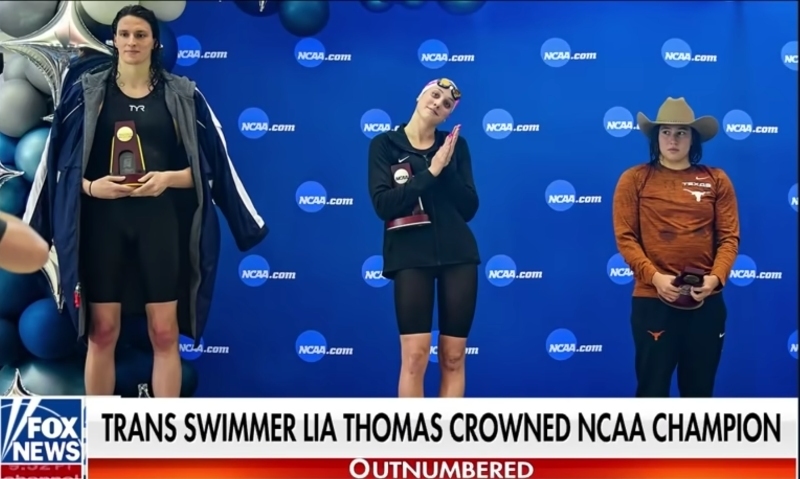
The U.S. Supreme Court has ruled that states may bar males who identify as female from competing in girls’ and women’s sports, finding that such policies do not violate Title IX or the Equal Protection Clause.
In a decision released Tuesday morning in State of West Virginia v. B.P.J., the high court upheld West Virginia’s 2021 Save Women’s Sports Act.
The ruling also affirmed a similar Idaho law, the Fairness in Women’s Sports Act, which was challenged in Lindsay Hecox et al. v. Bradley Little, et al.
Justice Brett Kavanaugh wrote the majority opinion, joined by Chief Justice John Roberts and Justices Amy Coney Barrett, Clarence Thomas, Neil Gorsuch and Samuel Alito.
“The question before the Court is: Under Title IX and the Equal Protection Clause of the Fourteenth Amendment, may schools maintain women’s and girls’ sports for biological females?” wrote Kavanaugh.
“In other words, may schools determine eligibility for women’s and girls’ sports based on biological sex? The answer is yes.”
Kavanaugh wrote that “Title IX prohibits discrimination on the basis of sex,” adding that the term “cannot plausibly be interpreted to refer to anything other than biological sex.”
“In addition, the Title IX regulations allowed separate sports teams precisely because of the biological differences between the sexes — namely, the inherent physical differences between biological women and biological men,” he continued.
“Separate sports teams for biological males and biological females are reasonable: Given the inherent physical differences between the sexes, allowing only biological females to play on women’s and girls’ teams can reduce the risk of physical injury and ensure fair competition.”
Justice Sonia Sotomayor filed an opinion concurring in part and dissenting in part, joined by Justices Elena Kagan and Ketanji Brown Jackson. Jackson also authored a separate opinion concurring in part and dissenting in part.
Sotomayor wrote that while she agrees “that B. P. J.’s Title IX claim fails,” she disagreed with the majority’s handling of “B. P. J.’s equal protection claim.”
“[T]he Equal Protection Clause demands much more when a State deploys a sex classification to achieve legislative aims. Perhaps West Virginia could meet those demands. Perhaps not,” Sotomayor said.
“In either event, because unresolved factual questions prevent the Court from assessing the merits of B. P. J.’s equal protection claim at this time, the Court should allow the District Court to address those factual questions in the first instance.”
In recent years, roughly half of U.S. states have passed laws prohibiting male students who identify as female from competing on girls-only athletic teams, citing concerns about fairness and safety.
The Supreme Court heard oral arguments earlier this year in the Idaho and West Virginia cases after lower appeals courts issued differing rulings on the state laws.