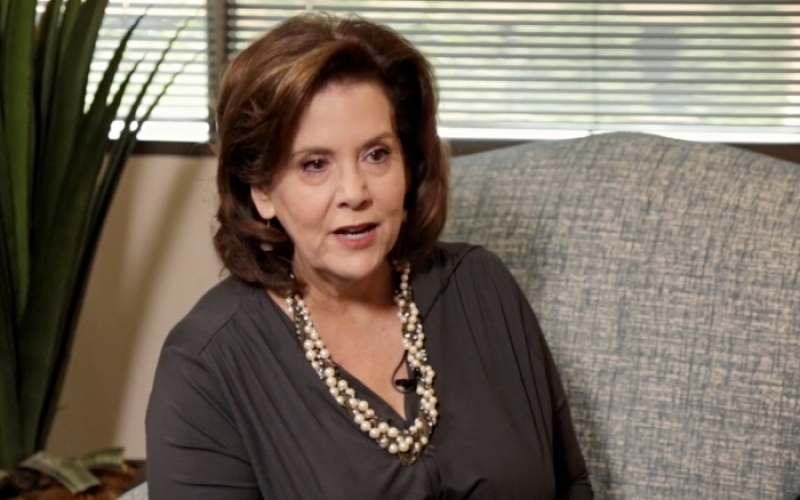
A Texas judge who declined to officiate same-sex weddings because of her Christian beliefs has prevailed in a lengthy legal battle, securing both monetary damages and protections against future disciplinary action.
First Liberty Institute announced Friday that a Travis County district court awarded Judge Dianne Hensley $10,000 in damages and more than $630,000 in attorneys’ fees following years of litigation involving the Texas Commission on Judicial Conduct.
Hensley, a judge based in Waco, was previously sanctioned by the Commission after she declined to perform marriage ceremonies for same-sex couples while continuing to officiate weddings for opposite-sex couples.
The court’s June 16 ruling granted Hensley the maximum damages permitted under the Texas Religious Freedom Restoration Act and prohibited the Commission from taking further action against her for adhering to her religious beliefs regarding marriage.
The ruling specifically bars the Commission from “investigating, sanctioning, or disciplining” Hensley for refusing to officiate same-sex weddings because of her religious beliefs, regardless of whether she continues to perform marriages for opposite-sex couples.
First Liberty Institute welcomed the outcome, arguing that Hensley had consistently followed both state law and official legal guidance.
“Judge Hensley always adhered to the law and the legal guidance provided by the attorney general of Texas,” said First Liberty Institute Executive General Counsel Hiram Sasser. “We are grateful that this case has concluded and that Judge Hensley was vindicated.”
The legal organization also noted that Hensley took steps to ensure same-sex couples could still obtain affordable wedding ceremonies within her county.
“To ensure that all residents of McLennan County have access to low-cost wedding ceremonies, Judge Hensley compiled a referral list of local wedding officiants that would perform same-sex ceremonies at her price.”
According to First Liberty, Hensley never received any public complaints regarding her policy. Nevertheless, the Commission issued a public warning alleging that she had violated the Texas Code of Judicial Conduct.
In response, Hensley filed suit in 2019, contending that the disciplinary action infringed upon her rights under the Texas Religious Freedom Restoration Act.
The legal landscape shifted last year when the Texas Supreme Court approved amendments to the Texas Code of Judicial Conduct addressing religious objections to officiating weddings.
The revised language states: “It is not a violation of these canons for a judge to publicly refrain from performing a wedding ceremony based upon a sincerely held religious belief.”
Hensley also pursued a separate federal lawsuit challenging the constitutionality of the U.S. Supreme Court’s 2015 Obergefell v. Hodges decision, which legalized same-sex marriage nationwide.
That complaint argued: “Officiating a wedding ceremony is speech, and the commissioners are preventing Judge Hensley from engaging in this speech unless she agrees to perform homosexual marriages in violation of her Christian faith and in violation of Texas law.”
First Liberty said a subsequent ruling by the Texas Supreme Court ultimately proved decisive in resolving the dispute.
On Jan. 9, 2026, the state's highest court ruled in a separate case that the Commission lacked authority under Texas law to discipline judges who decline to perform same-sex weddings for religious or moral reasons.
The outcome represents a significant victory for advocates of religious liberty and could influence the resolution of similar cases involving judges and public officials throughout Texas.