A North Carolina school district has agreed to a $95,000 settlement after a legal dispute involving a student’s tribute to conservative Christian activist Charlie Kirk on a high school campus.
The case stemmed from a lawsuit filed last year by a student and her parents against the Charlotte-Mecklenburg Board of Education. The family challenged the school’s decision to remove a memorial message painted on a campus spirit rock shortly after it appeared.
Alliance Defending Freedom, the nonprofit legal organization representing the student, announced Monday that the parties had reached an agreement resolving the case.
Under the settlement, the school board will pay $95,000 in damages and legal fees, remove any disciplinary findings against the student and implement revised policies governing student expression.
The controversy traces back to Sept. 10, 2025, when Turning Point USA founder Charlie Kirk was assassinated while participating in a public debate event at Utah Valley University in Orem, Utah.
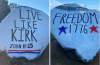
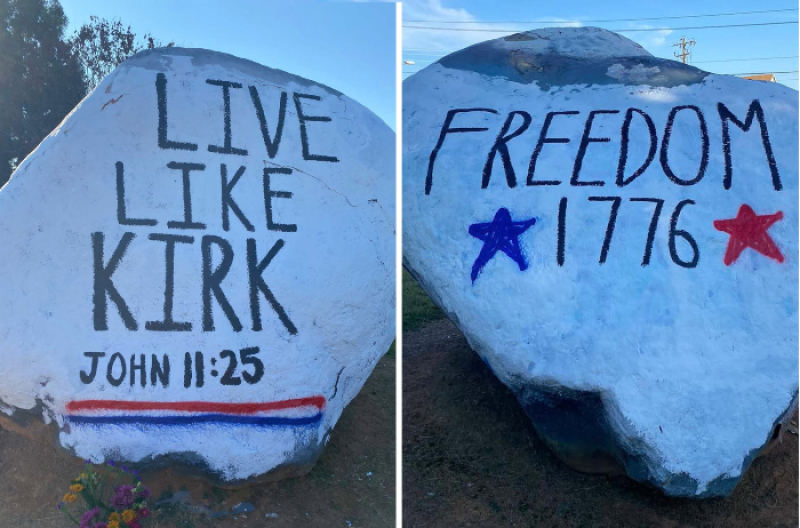
Following news of Kirk’s death, a student at Ardrey Kell High School in Charlotte, identified in court filings as “G.S.,” chose to honor him by painting a message on the school’s spirit rock.
The rock had long served as a platform for student expression and had previously displayed messages supporting athletic teams as well as social and political causes, including Black Lives Matter.
To commemorate Kirk, the student painted the phrase “Live Like Kirk” and included the Bible reference “John 11:25,” which reads “Jesus said unto her, I am the resurrection, and the life: he that believeth in me, though he were dead, yet shall he live.”
School administrators responded by removing the tribute within hours. The principal informed members of the school community that the display had not been authorized.
According to the lawsuit, officials characterized the memorial as “vandalism” and indicated that law enforcement had been contacted regarding the matter.
Court filings alleged that those claims were later withdrawn. School officials reportedly acknowledged that authorities had not been contacted and subsequently introduced a revised policy stating that the spirit rock was “not to be used for personal, political or religious messages.”
The complaint also accused school personnel of improperly handling the investigation. According to the filing, administrators required the student to provide access to her phone records without parental consent and failed to advise her and her family of their rights during what was presented as a criminal inquiry.
With the settlement finalized, the case closes a months-long dispute over student expression, religious liberty and constitutional protections in public schools.