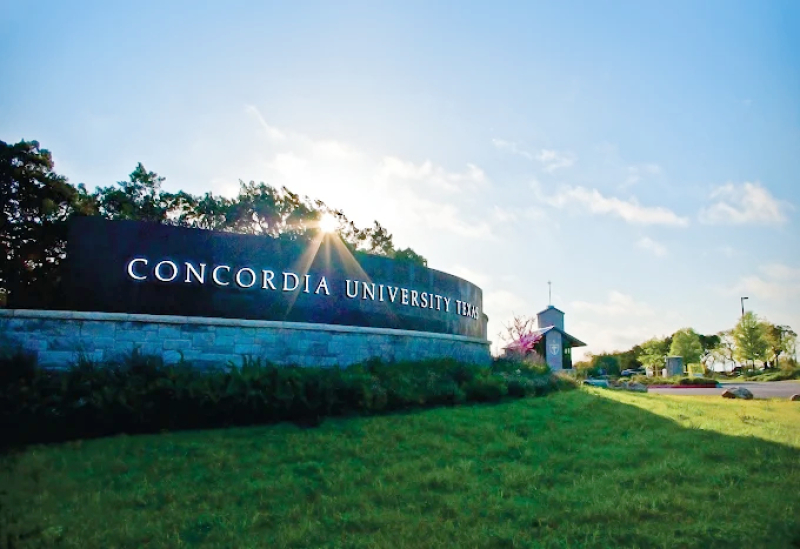
A federal appeals court has ruled in favor of The Lutheran Church—Missouri Synod in its legal dispute with Concordia University Texas, finding that the denomination cannot be forced to violate its own governing structure in order to pursue litigation.
In a 2-1 decision, the 5th U.S. Circuit Court of Appeals held that a lower court improperly interfered with matters protected by the First Amendment's church autonomy doctrine.
Writing for the majority, Circuit Judge Edith H. Jones said the district court had “quintessentially violated the church autonomy doctrine.”
“The church autonomy doctrine, a corollary of the First Amendment, protects religious institutions’ internal management decisions and doctrinal self-governance from judicial intrusion,” Jones ruled.
She added, “[The district court’s] invasive inquiry replaced the Church’s description of its polity, rooted in doctrine, with the court’s secular reading of the Church’s constitution, bylaws, and policies. The district court engaged in precisely the type of review that the doctrine seeks to prevent.”
The dispute began in 2022 after Concordia University Texas voted to amend its governing documents, removing a requirement that it comply with LCMS bylaws.
At the time, Concordia President Donald Christian insisted the university was not ending its relationship with the denomination.
He explained, “This vote simply reframes the nature of that relationship so that governance will be directed solely by the Board of Regents rather than shared with Synod.”
Following the vote, the LCMS Commission on Constitutional Matters ruled that Concordia should have obtained denominational approval before making the changes. After the university refused to recognize newly elected regents in 2023, the denomination filed suit.
In a dissenting opinion, Circuit Judge James E. Graves Jr. argued that “The Synod holds the substantive rights at issue, and is therefore an indispensable party.”
Becket attorney Daniel Blomberg welcomed the ruling, saying, “In America, churches — not courts — get the final say in how they are structured and governed.”
He added, “Uncle Sam can’t remake houses of worship into his own image. The Fifth Circuit reinforced that common-sense rule, which is a win for every faith community in the country.”