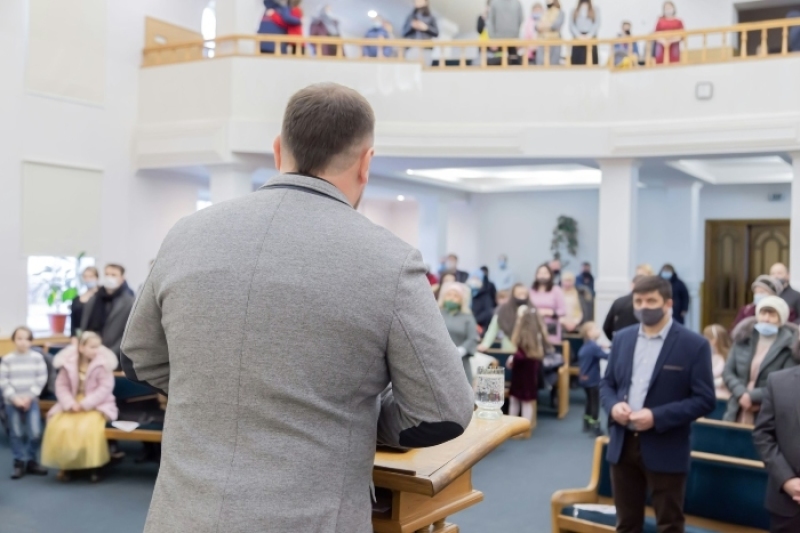
A new Pew Research Center survey suggests that American churches continue to serve as venues for political and social discussion even when no presidential election is taking place.
The study found that 66% of Americans who attend religious services at least once a month said their clergy had spoken about at least one political or social issue during the previous several months. The findings are based on a survey of 1,391 regular worship attendees conducted between April 6 and April 12.
Among the topics most frequently referenced by clergy were abortion, Israel and homosexuality. The survey indicated that abortion was especially likely to be discussed among Catholic and white Evangelical congregations, while white Evangelical churchgoers reported hearing more conversations about homosexuality than other groups.
Immigration emerged as another issue where perspectives differed among religious traditions. Fifteen percent of Catholics said they had heard messages encouraging congregations to welcome and assist immigrants, while only 3% reported hearing support for stricter immigration enforcement measures.
Across Catholic and most Protestant traditions, about 15% of respondents recalled hearing messages supporting environmental protection, compared with 3% who heard criticism of such regulations. White Evangelicals were somewhat less likely than other Christian groups to hear environmental issues addressed.
The survey showed a similar pattern regarding sex and gender-related topics. Fifteen percent of regular attendees reported hearing messages opposing transgender identity, whereas only 3% said they heard messages encouraging acceptance.
More broadly, regular churchgoers in both Protestant and Catholic settings were considerably more likely to hear clergy express opposition to abortion, homosexuality and transgender identity than support for abortion rights or LGBT-identified individuals.
Discussion surrounding recent U.S. military involvement in Iran appeared less common and more varied. About 8% of respondents said they heard clergy speak against military action, 4% heard support for it and 9% reported hearing neutral comments on the conflict.
Support for Israel was more evident among white Evangelicals and black Protestants than among other Christian groups.
Researchers also examined how worshippers perceive the political leanings of their clergy. Nearly half of respondents, 44%, said they could not determine whether their religious leaders leaned toward either major political party, while 27% described their clergy as politically mixed.
Only 19% of respondents viewed their clergy as mostly Republican, and 8% considered them mostly Democratic. White Evangelicals (36%) were the group most likely to perceive their clergy as Republican-leaning, while black Protestants (21%) were the most likely to identify a Democratic orientation among their religious leaders.
The findings were drawn from Pew Research Center’s American Trends Panel, a nationally representative survey panel composed of randomly selected U.S. adults. Of the 3,775 panelists invited to participate, 3,592 completed the survey, resulting in a response rate of 95%.