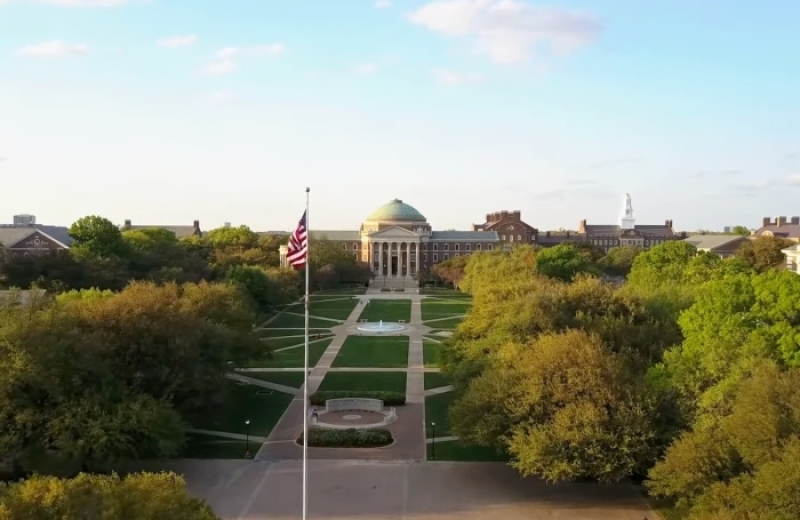
The United Methodist Church and Southern Methodist University have reached a resolution that ends a years-long legal dispute over the university’s effort to separate from the denomination.
In a joint statement released last week, SMU and the UMC South Central Jurisdiction said they had “reached an agreement that provides a clear framework for their relationship moving forward and affirms their shared commitment to the University’s mission.”
The agreement concludes litigation that began in 2019 and includes SMU’s commitment to revise its Articles of Incorporation in a way that maintains its formal connection with the regional body of the denomination.
University leadership welcomed the outcome, expressing optimism about future collaboration.
“The Board of Trustees, the University, and I are pleased we have reconciled with the SCJC, and we very much look forward to a collaborative and enhanced relationship into the future,” said SMU President Jay Z. Hartzell.
Founded in 1911, SMU is home to the Perkins School of Theology, one of 13 seminaries supported by the UMC through its Ministerial Education Fund.
The legal conflict emerged against the backdrop of longstanding divisions within the United Methodist Church over issues such as same-sex marriage and the ordination of LGBTQ clergy.
At a special General Conference session in February 2019, delegates adopted “The Traditional Plan,” which upheld existing restrictions on same-sex unions and clergy.
Later that year, SMU’s Board of Trustees voted to assert that it, rather than the UMC, was “the ultimate authority for the university,” prompting the SCJC to file a lawsuit alleging “unauthorized acts” and arguing that it serves as the “electing, controlling, and parental body of SMU.”
Although a Texas district court initially ruled in favor of SMU in 2021, that decision was overturned in July 2023 by a three-judge panel of the Texas Fifth Court of Appeals, which emphasized the denomination’s longstanding ties to the university.
While the appeals court allowed the SCJC’s breach-of-contract claim to proceed, it upheld the dismissal of allegations that SMU had violated fiduciary duties.
In June of last year, the Texas Supreme Court released a decision concluding that the SCJC could sue SMU over the effort to leave the UMC.
Justice Debra Lehrmann, writing for the majority, concluded that the regional body “has statutory authority to sue SMU to enforce its rights under the articles and the Texas Business Organizations Code and that the Conference may pursue, at least at this stage, its breach-of-contract claim as a third-party beneficiary of SMU’s articles of incorporation.”
Following that decision, the UMC reiterated its stance, stating that the “favorable opinion from the Court supports our original position that SMU must seek the approval of the SCJ when making changes to its amendments.”


