Co-chaired by Smith and McGovern; testimony from Tara Oh and Susan Solti highlights restrictions on information flow into North Korea and limits on defector-led activities
The Tom Lantos Human Rights Commission, a bipartisan human rights body under the U.S. Congress, held a hearing on North Korean human rights at 12:30 p.m. on the 28th at the Rayburn House Office Building near the U.S. Capitol in Washington, D.C., focusing on the importance of the flow of external information to North Korean citizens and the human rights movement led by North Korean defectors.
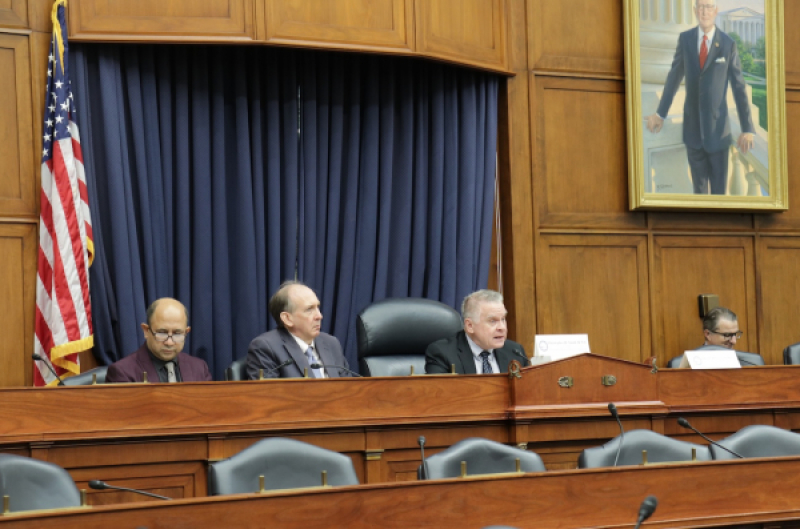
The official theme of this hearing was “North Korean Human Rights Movement: Current Prospects and Obstacles.” The hearing was co-chaired by Republican Congressman Christopher H. Smith (R-NJ) and Democratic Congressman James P. McGovern (D-MA). The Tom Lantos Human Rights Commission lists both lawmakers as co-chairs; Representative Smith represents New Jersey’s 4th Congressional District, and Representative McGovern represents Massachusetts’ 2nd Congressional District.
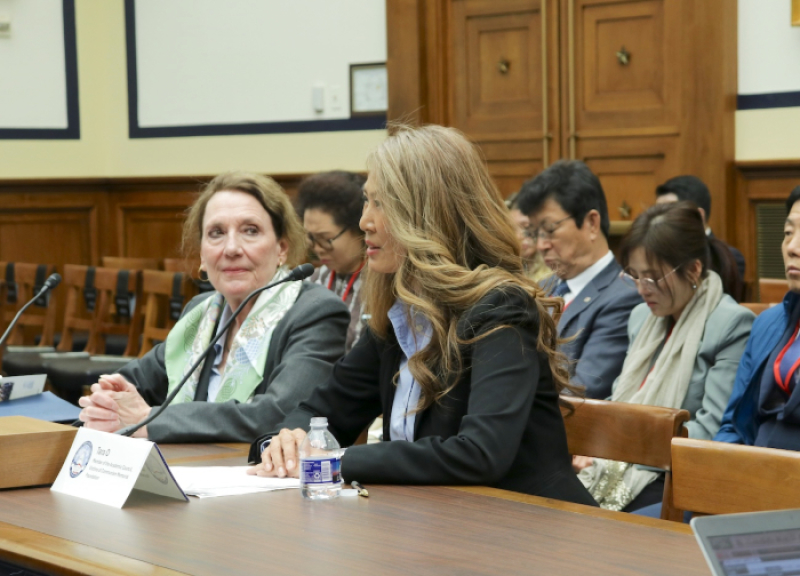
Dr. Tara O and Ms. Suzanne Scholte, President of the North Korea Freedom Coalition, testified at the hearing. According to the committee’s announcement, Dr. O was introduced as the author of “The Collapse of North Korea: Challenges, Planning, and Geopolitics of Unification” and a member of the Academic Committee of the Victims of Communism Memorial Foundation, while Ms. Scholte was introduced as the chair of the North Korea Freedom Coalition and Free North Korea Radio.
“Information from the outside is getting into even the closed-off North Korea”
The hearing began by examining the North Korean regime’s information blockade and control mechanisms. In its announcement, the committee described North Korea’s human rights situation as among the most severe and repressive in the world, noting that the regime strictly restricts freedom of expression, movement, and access to outside information. It also stated that reports continue to indicate that North Korean authorities have further intensified their efforts to block outside information and control ideology since the COVID-19 pandemic.
In his opening remarks, Rep. Chris Smith said the North Korean regime denies freedom of expression, religion, and movement, and places particular emphasis on blocking citizens’ access to outside information, while noting that even within such a closed system, external information and ideas continue to seep in and become more valuable and powerful as the regime attempts to suppress them.
Congressman Smith explained the significance of the flow of information by citing testimonies from North Korean defectors, noting that a written testimony from a defector leader stated that everything changes when North Korean citizens come to understand the rights God has given them. He also mentioned another defector’s experience of listening to the radio, explaining that banned radio signals served as the first window through which they encountered freedom and hope. He further emphasized that the most powerful force capable of changing North Korea is not military might but information, adding that information changes people, and changed people ultimately change society.
“Policies that block the flow of information are not neutral measures”
Congressman Smith also directly addressed the changing environment in South Korea surrounding the North Korean human rights movement. He noted that while the U.S. Congress and government have long regarded South Korea as an ally of liberal democracy and a partner in promoting human rights, concerns regarding the North Korean human rights movement have recently been raised.
He specifically highlighted restrictions on activities aimed at introducing information into North Korea, stating that policies that suppress the flow of information into North Korea or punish those seeking to reveal the truth are not neutral acts. He further emphasized that such policies affect whether North Korean citizens can hear alternative voices, whether defectors can continue their work, and whether the cause of human rights will advance or retreat.
While noting that peace on the Korean Peninsula is necessary, Congresswoman Smith pointed out that North Korea cannot be deterred by suppressing the voices of freedom or restricting basic freedoms in the South. Referring to the North Korea Human Rights Act and bipartisan congressional engagement, he stated that the defense of human dignity and human rights is also a central issue in confronting the Kim regime’s nuclear threats.
Tara Oh Warns Shrinking Freedom in South Korea Undermines North Korean Human Rights Movement
Dr. Tara Oh, the first witness to testify, is a retired U.S. Air Force lieutenant colonel who has served as a researcher at the Institute for Korean-American Studies and a visiting scholar at the Pacific Forum. She majored in public policy and earned a bachelor’s degree from UC Davis, a master’s degree from Princeton University, and a Ph.D. from the University of Texas. Her major publication is “The Collapse of North Korea”.
Dr. Oh linked the issue of human rights in North Korea to the state of liberal democracy in South Korea. She argued that while North Korean defectors are recognized as citizens of the Republic of Korea upon arriving in South Korea, that space of freedom is being lost. He continued by stating that restrictions on freedom of expression and freedom of religion are increasing in South Korea, and that measures that suppress freedom are being codified into law.
Referring to the South Korean Constitution and the liberal democratic order, Dr. Oh raised issues including recent discussions of constitutional amendments, controversies over freedom of expression, debates over election fairness, and the influence of the Chinese Communist Party. She argued that while it may appear to be a subtle change in wording on the surface, it is a matter that alters the very foundation of the political and economic system, adding that we must be wary of the trend toward shifting from a liberal democratic and market economy to a socialist order.
She also cited the law penalizing the distortion of history regarding the May 18th Democratization Movement, as well as investigations into anti-China remarks and allegations of election fraud, noting that there is a growing trend of framing critical remarks as hate speech and subjecting them to investigation. This point reflects Dr. Oh’s arguments and concerns and is a matter of significant political and legal debate within South Korea as well.
“Issues of Freedom of Expression and Religious Freedom Are Linked to the Flow of Information into North Korea”
Dr. Oh also addressed the issue of religious freedom separately. She claimed that some pastors have faced investigations, lawsuits, and pressure to be detained due to political statements, participation in rallies, or invited speeches within churches. She continued by noting that South Korea is one of the countries in Asia where Christianity plays a significant role, and that it is a serious contradiction for legal attempts to suppress religious freedom to emerge in a country where the Constituent Assembly began with prayer.
She believed that if the space for civil society, churches, and North Korean defector organizations to operate within South Korea were to shrink, efforts to send information to North Korean residents would inevitably be affected. Dr. Oh stated that blocking the flow of information into North Korea is not simply a matter of one or two activists, but a matter of blocking the channels through which North Korean residents can access the outside world.
Susan Solti Says North Korean Human Rights Movement Faces Most Difficult Period in Its History
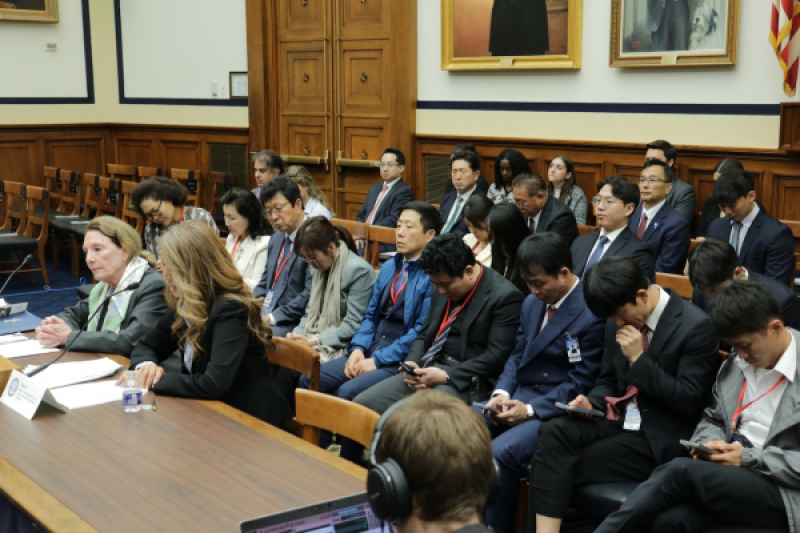
Susan Solti, who testified as the second witness, assessed that the North Korean human rights movement is facing an extremely difficult phase. She stated that they are currently facing the most challenging period in the history of the North Korean human rights movement, citing two reasons. First, she argued that for decades, the international community has not listened sufficiently to the voices of those who know North Korea best—namely, North Korean defectors. Second, she claimed that the South Korean government is neglecting its constitutional duty regarding North Korean human rights and the dissemination of information into North Korea.
Regarding the nature of the North Korean regime, Solti pointed out that North Korea will not abandon its nuclear weapons and that the dictatorship is concerned only with its own survival, not its people. She continued by emphasizing that human rights are the Achilles’ heel of the North Korean regime, adding that everything will change when North Koreans realize they were not born as slaves to the Kim family, but as beings endowed by God with the right to freedom.
She raised issues regarding the South Korean government’s suspension of broadcasts to North Korea, the cessation of support for defector organizations, and the enforcement of the law banning leaflets to North Korea, asserting that for the first time South Korea has ended all radio broadcasts to North Korea and, for the first time, it has ended all support for defector organizations. She also stated that they are actively enforcing the law banning leaflets to North Korea, which has been ruled unconstitutional, adding that this criminalizes activities aimed at securing the freedom and human rights of North Korean citizens.
“North Korean defectors are the witnesses who know the reality of North Korea best”
Throughout her testimony, Representative Solti emphasized the role of North Korean defectors, describing them as the people who know the reality of North Korea best and urging the U.S. Congress, South Korea, and the White House to listen to their voices.
Citing the example of Radio Free North Korea, she shared the memory of a North Korean defector who secretly listened to foreign radio broadcasts in North Korea at the age of 13. The defector testified that he first encountered freedom and hope through that broadcast, and that it became a turning point in his life. Referring to this, Representative Solti stated that the most powerful force for changing North Korea is not military power but information, adding that information changes people and that changed people ultimately change society.
In the same vein, Congressman Smith remarked that North Korean defectors are the most reliable witnesses to what human dignity means and what is at stake between North Korea’s nuclear threats and the free world, adding that they are the agents of change who strengthen and educate the hearts of North Korean citizens. He continued by stating that both the U.S. government and South Korea must help ensure their voices are heard more widely within North Korea, adding that, as one defector testified, what the North Korean regime fears most is information from the outside.
“Operation Truth”… “Delivering Truth, Hope, and the Gospel”
CEO Solti described the effort to send information to North Korean citizens as Operation Truth. She stated that their goal is to reach North Korean citizens by land, sea, and air, adding that this effort is not merely about sending supplies, but about delivering truth, hope, food, and the Gospel.
She explained that various items—including USB drives, small radios, medicines, $1 bills, and leaflets—have been delivered to North Korean residents, noting that these efforts have served as a channel to break through the North Korean regime’s information blockade. She specifically mentioned a case from May 2023 of a family that defected via the West Sea, noting that the family had been exposed to leaflets since childhood and, as adults, viewed them as a sign that the outside world has not forgotten them.
However, Representative Solti claimed that South Korean authorities have recently taken measures to block such activities, including deploying police, designating certain areas as danger zones, and encouraging the reporting of activists. She emphasized that North Korean residents cannot listen freely nor know freely, adding that Operation Truth is about delivering truth and hope to break down the walls of oppression.
Issues of Forced Repatriation and North Korean POWs Also Raised
The hearing also addressed the issue of the forced repatriation of North Korean defectors in China and the deployment of North Korean troops to the war in Ukraine. Solti pointed out that North Korean defectors detained in China face a high risk of torture and punishment if repatriated to North Korea, urging the U.S. and the international community to take stronger action to halt China’s forced repatriations.
She also mentioned the issue of North Korean soldiers being deployed to the front lines in Ukraine to support Russia, arguing that North Korean soldiers who have been taken prisoner must not be sent back to North Korea. She stated that repatriation to North Korea means torture and retaliation, adding that the international community must respond responsibly so that these individuals can start new lives in a free and safe environment.
Q&A Session Addresses Controversies Over Chinese Influence in South Korea and Election Fairness
Following the two witnesses’ presentations, the Q&A session covered issues such as the influence of the Chinese Communist Party in South Korea, controversies over election fairness, and the direction of U.S. human rights policy toward North Korea.
Congressman Smith asked about the possibility of the Chinese Communist Party influencing public opinion, elections, and policy directions in South Korea. Dr. Oh expressed concern, citing the size of the Chinese resident population in South Korea, the issue of voting rights in local elections, and instances of election campaigning in Chinese in some regions. Regarding the election management system, she also argued that while there are calls from citizens for an investigation, the structure makes it difficult to address this through institutional channels.
In response, Rep. Smith stated that the concerns of the South Korean people must not be overshadowed by other international issues, indicating his intention to convey the testimony to the State Department and other relevant agencies. He emphasized that even when discussing nuclear issues, human rights must be at the forefront of the agenda from the very beginning, adding that North Korean human rights issues must not be pushed to the sidelines.
Representative Solti stated that the U.S. administration must once again speak out strongly on North Korean human rights issues. Recalling that President Donald Trump had specifically mentioned North Korea’s political prison camps, human trafficking, and religious persecution in a past address to the South Korean National Assembly, she expressed his hope that the United States would return to its position as a strong advocate for human rights.
“Juche Ideology Is a System of Religious Worship”… Christian Persecution Also Mentioned
In the latter part of the hearing, the significance of Juche ideology in understanding the North Korean regime was also discussed. Representative Solti pointed out that Juche ideology should be viewed not merely as a political ideology but as a system of religious worship. She explained that the cult of personality surrounding the Kim Il-sung family has distorted and appropriated Christian language and symbols, adding that this is why the North Korean regime fears Christianity so intensely.
Referring to the relationship between the Korean independence movement and the Christian faith, she said that the North Korean regime has suppressed Christianity because it recognizes the power of freedom inherent in the Christian faith. She went on to emphasize that the persecution of Christians in North Korea is not merely political repression but systemic oppression aimed at controlling people’s minds and souls.