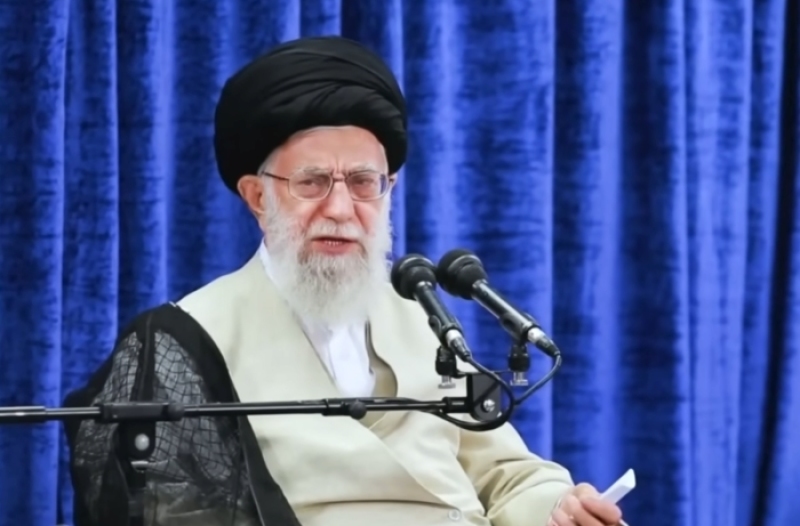
Governments around the world responded with a mix of caution and sharp disagreement after coordinated U.S. and Israeli strikes in Iran reportedly killed Supreme Leader Ayatollah Ali Khamenei and other senior regime officials on Saturday.
President Donald Trump announced on social media that Khamenei had died, calling the development “the single greatest chance for the Iranian people to take back their Country.”
Iranian state outlets confirmed early Sunday that the 86-year-old supreme leader had died but did not specify the cause.
Tehran retaliated swiftly, launching missiles and drones toward Israel and targeting U.S. military installations throughout the Middle East, significantly heightening regional tensions.
Australia and Canada signaled support for Washington’s actions, while Russia and China openly condemned the military campaign.
Canadian Prime Minister Mark Carney said Iran is “the principal source of instability and terror throughout the Middle East,” reaffirming Israel’s right to self-defense and expressing Ottawa’s backing for U.S. efforts to block Tehran from acquiring nuclear weapons.
“Despite diplomatic efforts, Iran has neither fully dismantled its nuclear program, halted all enrichment activities, nor ended its support for regional terrorist proxy groups,” Carney said.
Leaders from the United Kingdom, France and Germany — Prime Minister Keir Starmer, President Emmanuel Macron and Chancellor Friedrich Merz — issued a joint appeal urging renewed diplomacy between Washington and Tehran. “We condemn Iranian attacks on countries in the region in the strongest terms. Iran must refrain from indiscriminate military strikes,” they said.
Separately, Starmer emphasized that Britain “played no role” in the strikes and reiterated that Iran “must never be allowed to develop a nuclear weapon,” pointing to more than 20 alleged Iranian-backed plots uncovered in the U.K. over the past year.
Russia’s Foreign Ministry denounced the operation as “a pre-planned and unprovoked act of armed aggression against a sovereign and independent U.N. member state,” accusing the United States and Israel of pursuing regime change under the guise of nuclear security concerns.
China’s government expressed that it was “highly concerned” by the escalation and urged an immediate cessation of hostilities, calling for a return to negotiations and respect for Iran’s sovereignty and territorial integrity.
Oman, which has previously mediated discussions between Washington and Tehran, criticized the strikes as a breach of international law and peaceful conflict resolution principles. Foreign Minister Badr al-Busaidi said the attacks had undermined “serious negotiations.”
Norway’s Foreign Minister Espen Barth Eide warned that the breakdown of talks between the U.S. and Iran could spark a “new, extensive war in the Middle East.”
The 22-member Arab League described Iran’s retaliatory strikes as violations of the sovereignty of states seeking stability, while Morocco, Jordan, Syria and the United Arab Emirates condemned Iranian attacks on U.S. facilities in Kuwait, Bahrain, Qatar and the Emirates.
Saudi Arabia likewise criticized what it called Iranian aggression, labeling it a breach of sovereignty.
Jordan’s King Abdullah II and UAE President Sheikh Mohamed bin Zayed discussed the crisis in a phone call and called for intensified diplomatic efforts to calm the situation, according to a statement.
Amid the mounting crisis, Pope Leo XIV addressed the conflict during his weekly message in St. Peter’s Square. “I address a heartfelt appeal to the parties involved to assume the moral responsibility to stop the spiral of violence before it becomes an irreparable abyss,” he said.