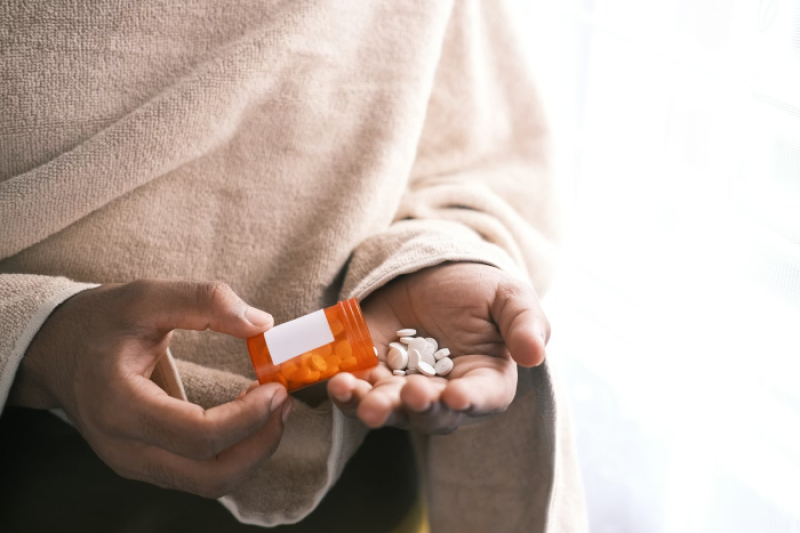
The U.S. Supreme Court’s recent decision to permit abortion pills to be mailed nationwide, including into states with pro-life protections, has sparked fierce backlash from pro-life organizations and conservative leaders who argue the policy undermines state laws and places women and unborn children at risk.
Last Thursday, the high court issued an order temporarily allowing abortion drugs to continue being distributed by mail while ongoing legal challenges proceed through the federal courts. The case stems from litigation brought by the state of Louisiana seeking to prohibit the mailing of abortion pills such as Mifepristone.
The Supreme Court’s action effectively paused a ruling from the United States Court of Appeals for the Fifth Circuit as the broader dispute over federal abortion drug policy continues.
The order drew dissents from Supreme Court Justices Samuel Alito and Clarence Thomas. In his written dissent, Thomas argued that abortion pill providers should not receive legal protection from financial losses connected to their activities.
“They cannot, in any legally relevant sense, be irreparably harmed by a court order that makes it more difficult for them to commit crimes,” Thomas wrote, adding that abortion drug providers “are not entitled to a stay of an adverse court order based on lost profits from their criminal enterprise.”
Lila Rose, president of Live Action, sharply criticized the ruling, describing it as “tragic and wrong” and “a direct assault on the right of states to defend innocent human life.”
“The Comstock Act already prohibits mailing abortion drugs, and it must be enforced,” Rose said. “No abortion business has a right to ship death through the mail, and no state should be forced to watch its pro-life laws nullified by out-of-state abortionists.”
Rose also warned Republicans could face political repercussions if the policy remains unchanged.
“If the Trump administration refuses to act, there will be grave consequences for babies and mothers, and political consequences for Republicans in the midterms. Pro-life voters did not elect Republicans to manage the abortion pill regime. They elected them to protect children, defend mothers, and enforce the law,” she stated.
Tony Perkins, president of the Family Research Council and a former Louisiana lawmaker, also denounced the Supreme Court’s action.
“The Court's action today perpetuates the Biden-era murder by mail policy that undermines the right of states to protect life and endangers women. This policy, left in place by the Trump FDA, has driven an estimated 21% increase in abortion,” Perkins said.
Rose and Perkins both called on the Food and Drug Administration to suspend and remove mifepristone and its generic equivalents from the market while conducting what they described as a transparent and scientifically unbiased review of the drug’s safety risks. They additionally urged the FDA to halt the mailing of abortion pills nationwide.
Carol Tobias, president of National Right to Life Committee, expressed concern that the ruling leaves women vulnerable to dangerous medical complications.
“Women facing unexpected pregnancies deserve real medical care and support, not a one-size-fits-all mail-order abortion system that minimizes risks and leaves women isolated during medical emergencies,” Tobias said.
She further argued that “abortion drugs can be ordered online with minimal medical oversight and shipped directly to homes,” which she said increases the risk of coercion, manipulation and exploitation.
Erica Inzina, policy director for Louisiana Right to Life, also criticized the court’s order in comments published by LifeNews.
“I am deeply disappointed that the Supreme Court has allowed this dangerous mail-order abortion drug policy to continue while the case proceeds,” Inzina said.
At the same time, she emphasized that the order should not be interpreted as a final ruling on the legality of the FDA’s abortion drug regulations.
“Nonetheless, this order should not be mistaken as the Supreme Court approving the FDA’s reckless decision to remove basic safeguards for abortion drugs. At this moment, it merely means the status quo will remain while the lower courts continue to consider the case,” she clarified.
“Still, women and girls deserve better than mail-order abortion and an industry that profits while avoiding accountability. Louisiana has the right and duty to protect mothers and unborn babies from abortion drugs being shipped into our state in violation of our pro-life laws and our laws governing the practice of medicine.”