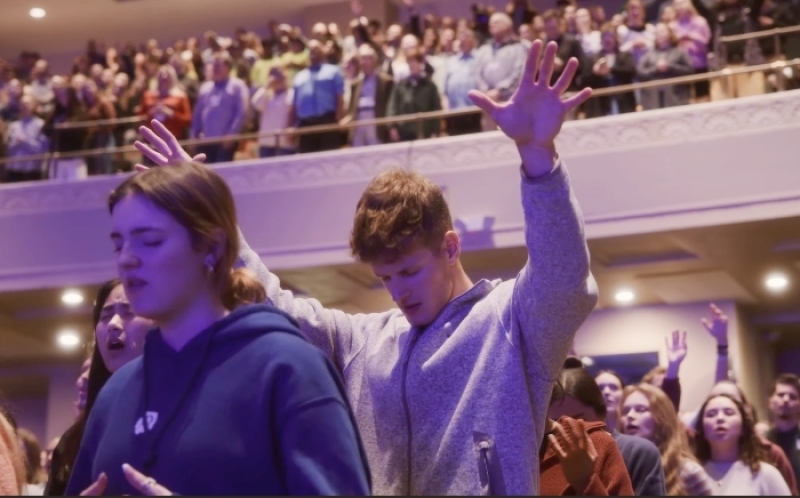
A recent survey indicates that younger generations in the United States, particularly millennials and Generation Z, express greater optimism than older age groups about the possibility of a nationwide spiritual revival.
The findings come from newly released research in Barna’s 2026 State of the Church initiative, published Monday in partnership with Gloo, which highlights that younger Americans are more inclined than older generations to anticipate a coming spiritual awakening.
In a February survey of 1,073 U.S. adults, Barna asked participants whether they believed that “a spiritual revival will happen in the U.S. in the next 12 months.” Among respondents, 38% of Gen Z adults answered either “definitely” or “probably,” compared to 29% of Gen X adults, 29% of the overall population, 28% of baby boomers and 25% of millennials.
Additional data from October 2025 surveyed 2,927 U.S. adults who expect a revival within the next year, asking them to explain their reasoning. Equal proportions of Gen Z and millennial respondents (43%) pointed to prayer as a key factor, while 38% of Gen Z and 40% of millennials cited "young generations turning to God" as a contributing cause.
The survey also found that 34% of Gen Z adults and 38% of millennials believe that a "search for meaning and purpose" could spark a revival. Similarly, 32% of Gen Z and 30% of millennials pointed to miracles, while 38% of Gen Z and 37% of millennials said that "people experiencing God" could drive such a movement.
Around one-third of respondents in both groups — 31% of Gen Z and 36% of millennials — identified "a hunger for God" as another possible catalyst.
Economic concerns were also seen as influential, with 33% of Gen Z and 34% of millennials agreeing that financial hardship could lead to spiritual renewal. Additionally, "job loss" was cited by 29% of Gen Z respondents and 26% of millennials as a possible trigger.
Mental health challenges appeared to resonate more strongly with Gen Z, as 42% of that group believed such struggles could prompt a revival, compared to 32% of millennials. Anxiety was also highlighted, with 35% of Gen Z and 30% of millennials indicating it could contribute to renewed spiritual interest.
Some respondents pointed to broader societal events, with 16% of Gen Z and 18% of millennials mentioning the COVID-19 pandemic and related lockdowns as potential influences.
Meanwhile, 16% of millennials and 11% of Gen Z said that "secularism losing popularity" might play a role, and 14% of Gen Z alongside 15% of millennials identified "the rise of godlike AI" as a possible factor in a future spiritual revival.


