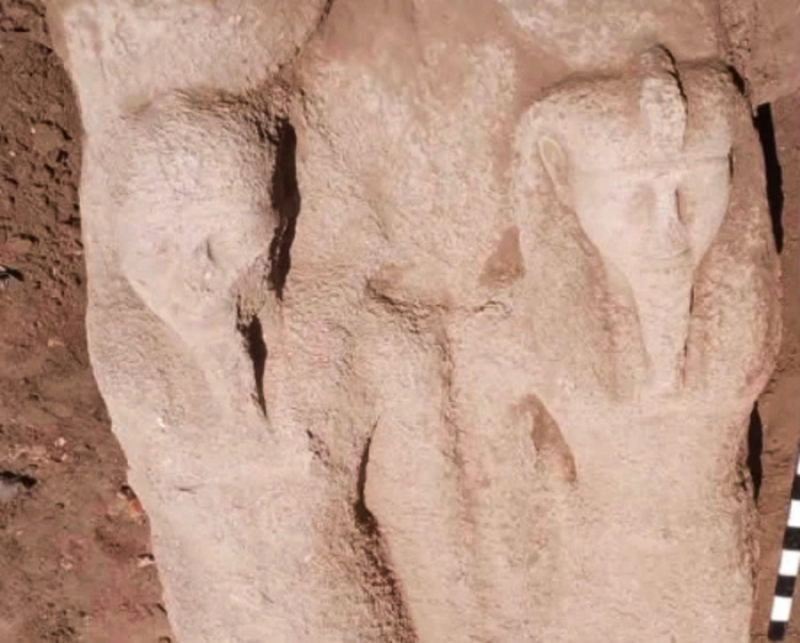
Archaeologists in Egypt have uncovered a large statue believed to represent Ramses II, a pharaoh frequently portrayed in films as the ruler associated with the biblical Exodus story.
The find was made at the Tel Faraoun archaeological site in Sharqia Governorate during a recent excavation mission, according to an April 22 statement issued by the Egyptian Ministry of Tourism and Antiquities and the Supreme Council of Antiquities.
Although parts of the statue, including the lower section, are missing, researchers estimate that it weighs between five and six tons and stands roughly seven feet tall.
Despite being in a "relatively poor condition," officials said the remaining portions "show artistic and property traits," and described the figure as "likely depicting King Ramses II."
Hisham Lithi, secretary-general of the Supreme Council of Antiquities, said the discovery provides "important archaeological evidence" of religious and royal activity in the eastern Nile Delta region.
He added that the find also reflects the ancient Egyptian practice of relocating statues of rulers from one location to another.
Mohamed Abdel-Badii, head of the Egyptian Archaeological Sector, said early analysis suggests the statue was not originally created at Tel Faraoun. Instead, scholars believe it was first constructed in Pi-Ramesses, the capital city established by Ramses II, before being transported and reused within a religious complex at the current site.
Officials confirmed that the statue has been moved to a secure facility to begin preservation efforts.
"In the framework of preserving this discovery, the statue was immediately found from inside the temple complex on site to the museum warehouse in the San El-Hajar area, as a prelude to the beginning of urgent and meticulous restoration work, according to the highest scientific standards of maintenance and preservation of relics," the April 22 statement explains.
Ramses II, who lived from 1303 B.C. to 1213 B.C., is widely regarded as one of ancient Egypt’s most prominent and influential pharaohs.
Although often associated with the Exodus story in popular culture, the Bible does not explicitly name the pharaoh who confronted Moses.
In the biblical Book of Exodus, the unnamed ruler resists Moses’ demand to free the Israelites, but limited historical records from that period make it difficult for scholars to definitively identify the figure.
Some interpreters have suggested Amenhotep II as a possible candidate for the Exodus pharaoh, though this view remains debated and is not universally accepted, with scholars noting it is "hardly universal, however, and by no means free of challenges."